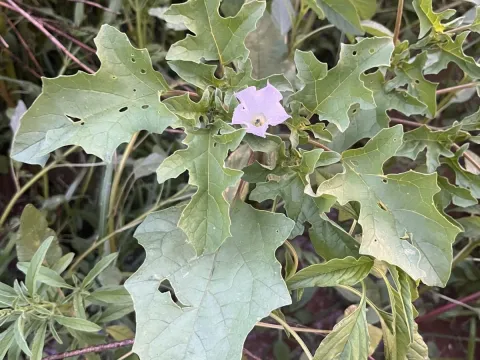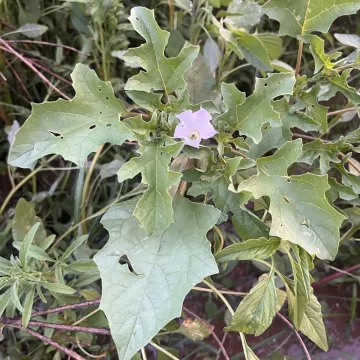
Oak-leaved thorn-apple
Datura quercifolia
Description
Oak-leaved thorn-apple (Datura quercifolia) is an annual herbaceous plant belonging to the Solanaceae family. It is characterized by its distinctive lobed leaves that resemble those of an oak tree, setting it apart from other species in the Datura genus. This plant is primarily recognized for its biochemical profile, being a source of specific tropane alkaloids.
The plant originates from the arid regions of Mexico and the southwestern United States. It is native to desert and semi-desert environments, where it grows in disturbed soils and high-temperature conditions. Because of its native environment, it is highly adapted to intense heat and periods of prolonged drought, making it an interesting subject for studies on water-efficient agricultural practices.
Botanically, Datura quercifolia is a branching plant that typically reaches a height of 50 to 100 cm. It features stems with a slight purple pigmentation and large, trumpet-shaped flowers that bloom at night. The fruit is a spherical, prickly capsule containing numerous dark seeds. All parts of the plant, especially the seeds and leaves, contain potent chemical compounds.
For cultivation, the plant requires well-draining, sandy or loamy soils with high exposure to direct sunlight. It is essential to manage moisture levels carefully, as the plant is susceptible to root diseases if waterlogged. Due to its sensitivity to frost, it is cultivated as an annual, with planting occurring only after the risk of spring frost has passed and temperatures are consistently warm.
The primary agricultural and industrial application of this plant is the extraction of alkaloids such as hyoscyamine and scopolamine for medical research and pharmaceutical manufacturing. It is managed with caution due to its high toxicity. Agronomists often monitor the crop for pests common to solanaceous plants, such as aphids and spider mites, which can affect overall yield and alkaloid content in the leaves.
- Rich source of medicinally important tropane alkaloids.
- High tolerance to arid and semi-arid climate zones.
- Preference for neutral to slightly alkaline soil types.
- Requires significant space for root and vegetative development.
Photo gallery