Dove tree
Davidia involucrata Baill.
Description
Davidia involucrata, commonly known as the dove tree, handkerchief tree, or ghost tree, is a unique deciduous species within the family Nyssaceae. It is a monotypic genus, meaning this species is the only one in its group, making it a botanical rarity highly valued in ornamental horticulture and arboretums worldwide.
The plant originates from the mountainous regions of central and southwestern China. In its native habitat, it thrives in cool, moist, and protected forest environments. Due to its distinct appearance and evolutionary history, it has been introduced to temperate zones globally, becoming a centerpiece in prestigious botanical gardens and private estate landscapes.
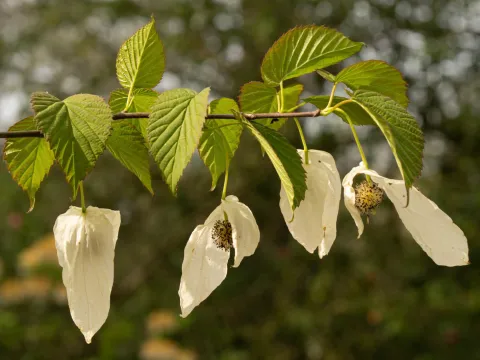
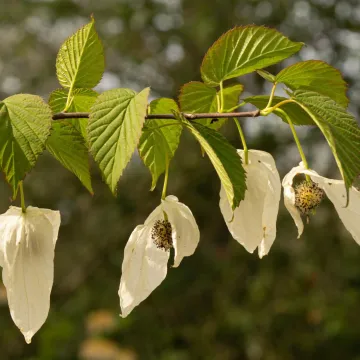
Botanically, the tree is most famous for its large, white, paper-like bracts that flank the actual flower clusters, giving the appearance of white doves resting on the branches. The leaves are broad and heart-shaped, providing a lush, green canopy during the summer months. The tree typically reaches a height of up to 20 meters, requiring significant space for its natural, spreading growth habit.
Agricultural requirements for Davidia involve specific site selection. It demands deep, fertile, moist, and well-drained soils, ideally with a neutral to slightly acidic pH. While it is hardy in most temperate climates, young specimens are sensitive to severe late frosts and drying winds, making protected locations essential during the establishment phase.
Regarding health and maintenance, the dove tree is generally resistant to major agricultural pests and diseases. However, growers should monitor for spider mites and aphids during hot, dry summer periods. Proper soil moisture management is critical to prevent root rot, which is the most common issue encountered in poorly drained or waterlogged site conditions.
Photo gallery