Daviesia mimosoides
Daviesia mimosoides
Description
Daviesia mimosoides, commonly known as the narrow-leaf bitter pea, is a perennial shrub belonging to the Fabaceae family. While not a conventional staple crop, it is a significant species within the Australian native flora, recognized for its resilience and its specific role in supporting local ecosystems through nitrogen fixation.
The species is native to eastern Australia, with a distribution range that spans across New South Wales, Victoria, and Queensland. It is typically found in dry sclerophyll forests and on rocky ridges. This native habitat has shaped its evolutionary development, enabling the plant to withstand varying moisture levels and nutrient-poor soil conditions characteristic of the Australian landscape.
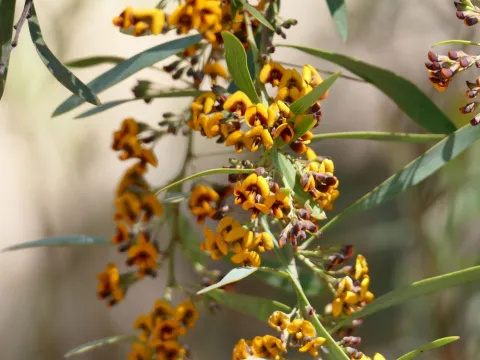
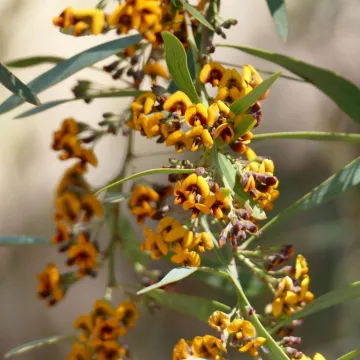
Botanically, Daviesia mimosoides is characterized by its stiff, erect growth habit and the presence of phyllodes—flattened leaf stalks that function as leaves. These structures are long and narrow, creating a distinct aesthetic that mimics certain mimosa species. The plant produces racemes of pea-shaped, yellow-to-brown flowers that bloom typically in the spring, adding seasonal interest to the landscape.
Regarding cultivation, the plant demands well-draining soils to avoid root decay. It is highly valued for its low maintenance requirements, as it thrives in poor soils and exhibits high levels of drought tolerance. While it does not require intensive agricultural input, providing full sun exposure is essential for maintaining a dense, healthy canopy and promoting regular flowering cycles.
The хозяйственное use of this plant is primarily focused on restoration ecology and sustainable landscaping. Due to its symbiotic relationship with rhizobia bacteria, it contributes to soil nitrogen enrichment. Typical pests include scale insects and various sap-suckers, while primary disease threats include root pathogens resulting from waterlogged conditions. Proper site selection and drainage management are the most critical factors for successful plant establishment.
- Drought tolerance
- Nitrogen-fixing capabilities
- Low maintenance requirements
- Excellent for soil stabilization
Photo gallery