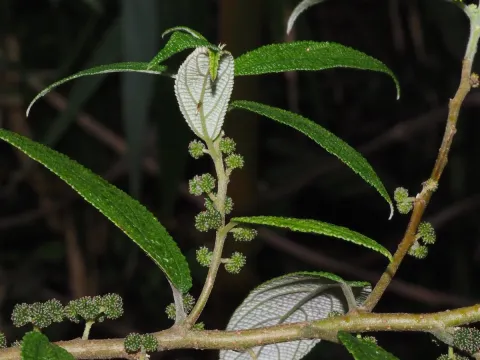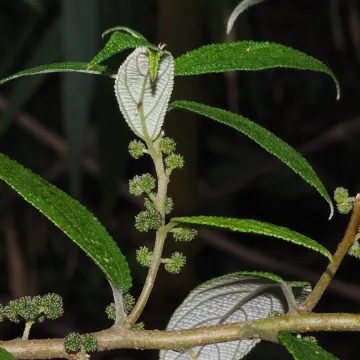
Debregeasia saeneb
Debregeasia saeneb
Description
Debregeasia saeneb is a perennial woody plant belonging to the Urticaceae family. It is recognized primarily for its role as a fiber-producing crop in specific regional agricultural systems, where its robust stems provide high-quality bast fibers suitable for traditional and modern industrial applications.
The plant is native to tropical and subtropical areas, particularly in parts of Asia and Africa. Its natural habitat is typically found in humid, sheltered environments, such as forest edges and riverbanks, which dictates its preference for sites that offer consistent moisture and protection from extreme weather conditions.
Botanically, it presents as a shrub or small tree characterized by alternate leaves and a fibrous vascular structure. The plant's ability to thrive in poor soils while providing erosion control makes it an interesting candidate for ecological land management alongside its primary function as a source of industrial fiber.
Agronomic requirements emphasize the need for well-draining, nutrient-rich soil and a climate characterized by high atmospheric humidity. In terms of cultivation, irrigation management is critical during the initial growth stages, and shading techniques are often employed to mimic the plant's native understory growing conditions.
Economic applications for Debregeasia saeneb are mainly found in the production of ropes, durable textiles, and fishing nets due to the fiber's high tensile strength. Beyond textiles, current research is exploring the potential for extracting medicinal compounds from its leaves, as the genus is known for diverse phytochemical properties.
- Strong tensile fiber properties
- Adaptability to semi-shaded conditions
- High water requirements for optimal yield
- Useful for hillside soil stabilization
The crop is susceptible to specific fungal pathogens that thrive in high humidity, such as leaf spots, and can be affected by pests like mites or various aphids. Integrated pest management (IPM) focusing on canopy ventilation and the use of organic deterrents is the most effective approach for ensuring sustainable crop health.
Photo gallery