Decalobanthus peltatus
Decalobanthus peltatus
Description
Decalobanthus peltatus is a robust, perennial woody vine belonging to the family Convolvulaceae. Formerly classified under the genus Merremia, this species is well-known in tropical botany for its aggressive growth habit. It is capable of forming dense, monotypic stands that smother existing vegetation, including tall trees, by utilizing them as physical support to reach the canopy.
The native range of the species encompasses the tropical regions of Southeast Asia, the Pacific Islands, and parts of Oceania. It thrives in disturbed habitats, forest edges, and secondary growth areas. Due to its rapid colonization potential, it has become a significant invasive weed in many territories, severely impacting both biodiversity and commercial agricultural lands.
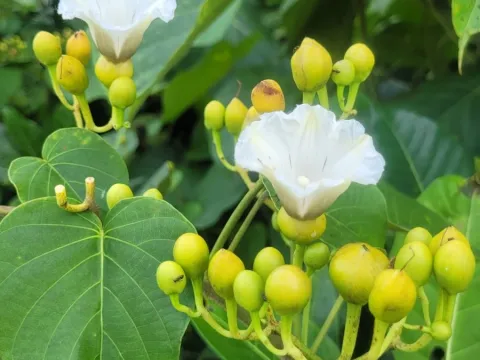
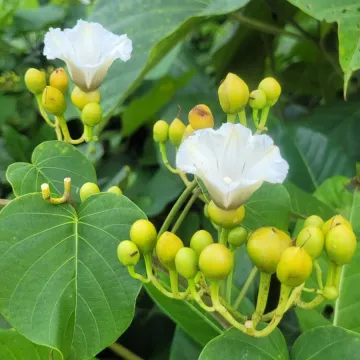
The botanical structure of the plant consists of long, twisting stems and distinctively peltate (shield-shaped) leaves. The flowers are typically white to cream, funnel-shaped, and relatively large, reflecting the typical morphology of the Convolvulaceae family. The plant is highly efficient in light interception, which allows it to outcompete almost any other neighboring vegetation in its path.
Environmental requirements for this species include high humidity, abundant rainfall, and consistently warm temperatures. While it can survive on various soil types, it is particularly successful in nitrogen-rich soils of disturbed areas. Agricultural management relies heavily on early detection and physical removal. Because the plant can regenerate from root fragments, complete eradication of the rootstock is necessary to prevent regrowth.
Economic and agricultural utility is virtually non-existent; in fact, the plant is viewed strictly as a pest. Potential threats to crops include shading out of coffee, cocoa, and fruit plantations. Common pests and diseases that affect the plant are often studied for potential biological control agents, but none have proven to be consistently effective at controlling the plant's spread in large-scale field conditions.
Photo gallery