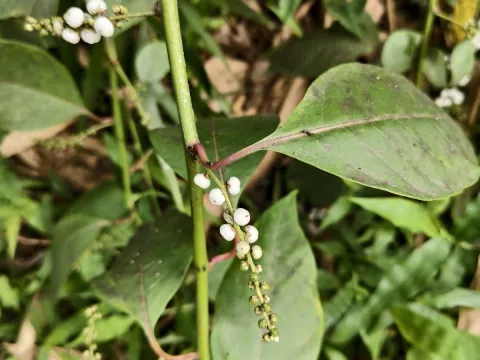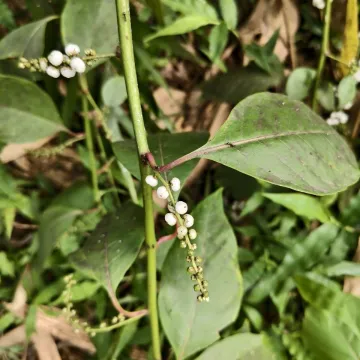
Deeringia polysperma
Deeringia polysperma
Description
Deeringia polysperma is a perennial climbing shrub or vine belonging to the Amaranthaceae family. It is a distinctive tropical species characterized by its robust growth habit and structural complexity, often found in habitats that provide sufficient support for its climbing stems.
The plant originates from Southeast Asia, with a native range extending across the Philippines and neighboring tropical regions. It thrives in the understory of dense forests, where high humidity and moderate light intensity create optimal conditions for its vegetative development and reproductive cycles.
Botanically, this species is defined by its simple leaves and characteristic berries that contain a high number of seeds, hence the specific epithet polysperma. The plant exhibits a vigorous growth pattern, requiring adequate space for its vine-like expansion. Its physiological traits allow it to tolerate varying levels of moisture provided the drainage is efficient.
Successful cultivation of this species requires a stable tropical environment. Agronomic requirements include:
- A well-draining, nutrient-rich potting mix or soil substrate.
- Consistency in ambient humidity levels to prevent leaf desiccation.
- Regular pruning to maintain shape and promote lateral branching.
- Placement in locations with filtered or indirect sunlight to prevent foliage burn.
In terms of economic and practical use, Deeringia polysperma is utilized in specialized ornamental landscaping and has been studied for its potential ethnobotanical properties. Common pests affecting this plant include spider mites and mealybugs, particularly in greenhouse environments. Disease management focuses on ensuring proper air circulation to mitigate the risk of fungal infections related to stagnant moisture.
Photo gallery