Delonix pumila
Delonix pumila
Description
Delonix pumila is a rare species of woody plant belonging to the Fabaceae family. Unlike its more famous relative, the Royal Poinciana, this species is a dwarf, succulent-like tree that has evolved unique physiological mechanisms to survive in the arid environments of its native habitat.
The plant originates from the island of Madagascar, specifically occupying dry forest regions and rocky terrains. Its natural adaptation involves storing water within a swollen trunk (caudex), which provides the necessary moisture reserves to endure extended dry seasons where water availability is extremely limited.
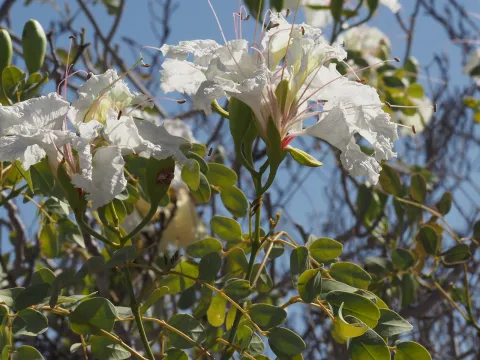
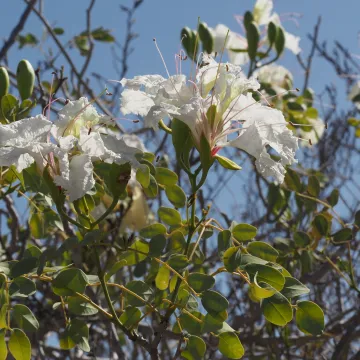
Botanically, it is characterized by its small stature, usually growing no more than a few meters in height. The foliage is bipinnate and somewhat leathery, serving to reduce transpiration. The flowers are particularly attractive, featuring delicate white to pink petals that stand out against the plant's rugged, grey-barked stem.
Cultivation requires strict adherence to xerophytic gardening principles. The primary requirements include high solar irradiance and a mineral-based, porous substrate that ensures rapid drainage. During the growing season, watering should be sparing, and during the dormant winter period, the plant must be kept dry to prevent root rot.
- Requires well-draining sandy or volcanic soil.
- Thrives in full sun exposure.
- Extremely sensitive to overwatering and high humidity.
In terms of economic and practical use, Delonix pumila is exclusively ornamental, highly prized by succulent collectors and landscape architects focusing on arid-climate gardening. Potential pests include mealybugs, and the most common pathological issues are related to fungal root rot, which typically arises from inadequate drainage or excessive soil moisture.
Photo gallery