Royal Poinciana
Delonix regia (Bojer ex Hook.) Raf.
Description
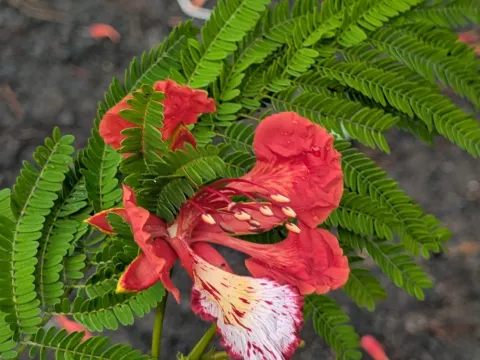
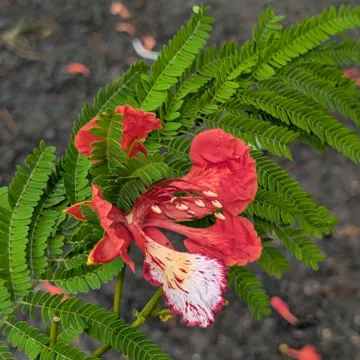
The Royal Poinciana (Latin: Delonix regia), also widely known as the flame tree, is a species of flowering plant in the bean family Fabaceae (subfamily Caesalpinioideae). This magnificent tree is renowned for its iconic fern-like leaves and flamboyant, large, orange-red flowers that create a spectacular display during the blooming season. It is considered one of the most stunning tropical trees globally.
Native to the dry deciduous forests of Madagascar, the tree has been introduced and naturalized in tropical and subtropical regions across the globe. It is a staple in landscaping projects throughout the Caribbean, Florida, Southeast Asia, and parts of Africa. It thrives best in open, sunny environments where it has enough space for its wide, spreading canopy to develop fully.
Botanically, the Royal Poinciana is a deciduous tree that can grow quite rapidly under ideal conditions. The leaves are bipinnate, consisting of many small leaflets that create a delicate, feathery appearance. After the flowering phase, the tree produces large, woody seed pods that can measure up to 60 centimeters in length, persisting on the branches long after the leaves have fallen.
Agricultural requirements for Delonix regia include full sun exposure and well-drained, nutrient-rich soil. It is intolerant of frost and does best in zones where temperatures remain consistently above freezing. Watering should be regular during the active growing season, but the tree benefits from a dry dormant period, which often acts as a biological trigger for the subsequent mass flowering event.
- Climate preference: Tropical to subtropical, frost-free.
- Soil requirements: Fertile, well-draining loams or sandy soils.
- Propagation: Seeds (require scarification or soaking in warm water).
- Maintenance: Minimal pruning needed, except for structural health.
In terms of economic and practical use, the primary role of the Royal Poinciana is ornamental and aesthetic. Its massive, umbrella-like canopy makes it an excellent choice for shade in public parks and residential streets. Furthermore, the tree contributes to soil stabilization in regions prone to erosion, and its wood is occasionally utilized for artisanal woodwork in local industries.
Regarding pest and disease management, the tree is generally hardy but susceptible to root rot if grown in heavy, waterlogged soil. Common pests include aphids, scale insects, and various caterpillars that can defoliate the tree. Maintaining healthy soil conditions and ensuring proper spacing between trees are the best cultural practices to prevent the spread of diseases and maintain the tree’s vigor.
Photo gallery