Nelson's Larkspur
Delphinium nelsonii
Description
Nelson's larkspur (Delphinium nelsonii) is a perennial herbaceous plant belonging to the Ranunculaceae family. Unlike its taller relatives, this species is noted for its compact growth habit and early spring blooms, making it an excellent candidate for alpine-style gardens and specialized rockery plantings.
The native distribution of this species spans the mountainous regions of Western North America, including states such as Colorado and Utah. It typically inhabits open slopes and high-elevation meadows, demonstrating a remarkable ability to thrive in harsh, exposed environments with rocky, well-draining soil compositions.
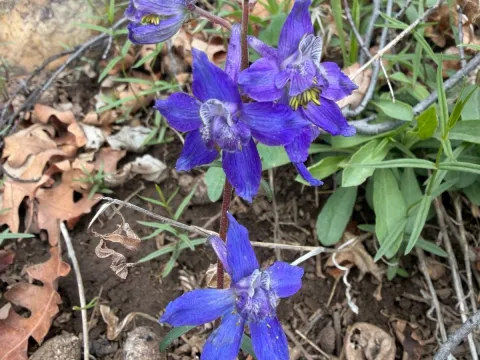
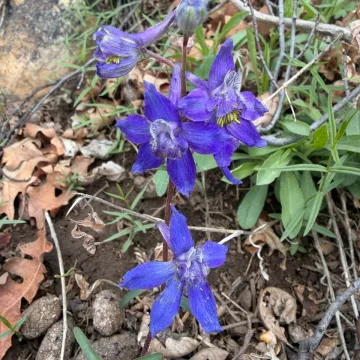
Botanically, the plant is characterized by deeply lobed basal leaves and slender stems topped with loose racemes of vibrant blue or violet flowers. The presence of a spur at the back of each flower is a diagnostic trait for the genus. The root system is sturdy and adapted to survive dry summer conditions after the plant has completed its early flowering cycle.
Agricultural and gardening requirements focus on mimicking its natural habitat. It necessitates a site with full sun and excellent drainage. Overwatering, particularly during the dormant season, is the primary cause of plant failure. It prefers neutral to slightly alkaline soils and does not require heavy fertilization, as it is adapted to low-nutrient environments.
The plant is primarily utilized for ornamental landscaping. It serves as an important ecological link, providing early nectar for bumblebees and other pollinators. Gardeners should be aware that, like many species in the Ranunculaceae family, the plant contains toxic alkaloids; therefore, it should be handled with care and kept away from livestock. Common pests include aphids and mites, while fungal pathogens like powdery mildew can appear if airflow is insufficient.
- Drought tolerance once established
- Preference for gritty, well-drained soil
- Early spring flowering period
- Low maintenance requirements
- Susceptibility to root rot in damp conditions
Photo gallery