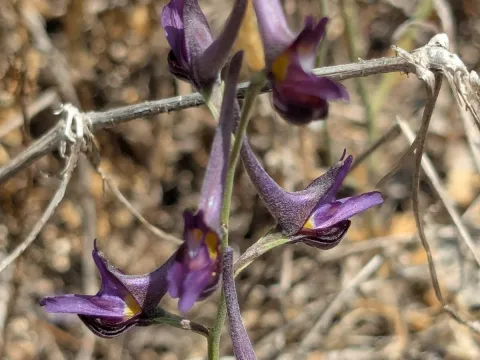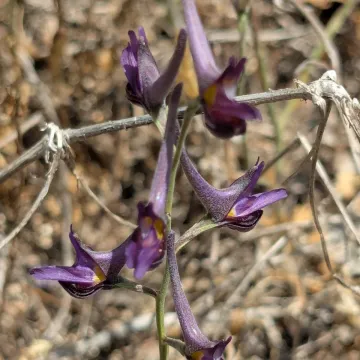
Peregrine larkspur
Delphinium peregrinum
Description
Peregrine larkspur (Delphinium peregrinum) is an herbaceous plant belonging to the Ranunculaceae family. While many species in the genus Delphinium are famous for their tall spikes, this specific variety is appreciated for its distinctive morphology and resilience in Mediterranean-like climates.
The plant originates from the Mediterranean basin and parts of Southwest Asia. It naturally thrives in sunny, open habitats with well-drained, often rocky soils. Due to its historical distribution, it is well-adapted to warm, dry summers and requires specific environmental conditions to reach its full development potential in a cultivated setting.
Botanically, the plant features a slender stem and deeply lobed foliage, typically growing to a height of about 30–60 centimeters. The flowers are characterized by their signature spurred petals, which usually display vibrant shades of blue or violet. Its root system is adapted for efficiency in arid soils, favoring deep moisture penetration over surface-level saturation.
Regarding agrotechnical requirements, the peregrine larkspur demands high light exposure and soil with excellent drainage. It is sensitive to waterlogging, which can lead to rapid root decay. Soil pH should ideally be neutral or slightly alkaline. Regular, light fertilization during the vegetative growth phase helps maintain vigor, while adequate spacing is essential to ensure good air circulation.
In terms of agricultural and horticultural utility, this species is primarily used for its aesthetic value in dry gardens or rockeries. However, it contains toxic alkaloids, necessitating careful handling and placement. Common pests include aphids and mites, while fungal diseases such as powdery mildew represent the main sanitary risks, especially in environments with high humidity or poor ventilation.
Photo gallery