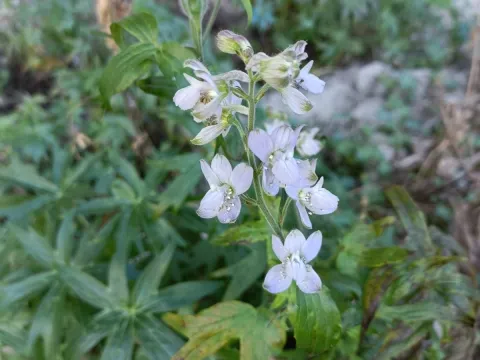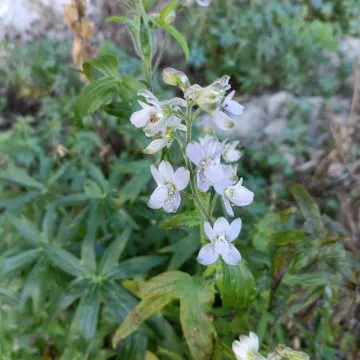
Painted larkspur
Delphinium pictum
Description
Painted larkspur (lat. Delphinium pictum) is a herbaceous perennial plant belonging to the Ranunculaceae family. This species is recognized for its unique appearance and is considered a valuable ornamental plant, often cultivated by horticulturists for its vibrant floral displays and graceful, upright growth habit.
The plant originates from the Mediterranean region, specifically native to the islands of Corsica and Sardinia. Its natural habitat includes rocky slopes and mountain meadows, where it has evolved to thrive in well-lit, sunny environments. The species is highly adapted to the distinct seasonal variations of the Mediterranean climate, which include mild, moist winters and dry, warm summers.
Botanically, Delphinium pictum features a rosette of palmate-dissected leaves and tall, erect stems terminating in racemes of spurred flowers. These flowers typically exhibit deep blue to purple hues, characteristic of the genus, providing significant aesthetic appeal. The plants reach their peak flowering phase during the late spring to early summer period, depending on local temperatures.
Agronomic requirements focus on providing a site with excellent drainage and a fertile, neutral-to-slightly-alkaline soil structure. In cultivation, it is crucial to avoid waterlogged soil, as the roots are susceptible to decay. Regular maintenance involves moderate irrigation and balanced fertilization during the active growing season to support the development of vigorous flower stalks.
The agricultural and horticultural utility of the plant is primarily decorative. Key areas of application include:
- Incorporation into rock gardens and mountainous landscapes.
- Use in perennial borders to provide vertical interest.
- Integration into wildlife-friendly gardens to attract pollinators.
- Cultivation as a specialized botanical specimen for plant enthusiasts.
The plant faces several typical threats, including fungal pathogens like powdery mildew, which flourish in high-humidity conditions with poor airflow. Common insect pests include slugs, snails, and various species of aphids, which can damage foliage and stems if left uncontrolled. Integrated pest management, involving proper spacing and appropriate prophylactic fungicide/insecticide applications, is essential for maintaining plant health.
Photo gallery