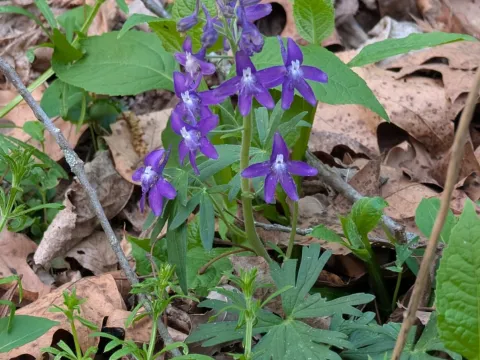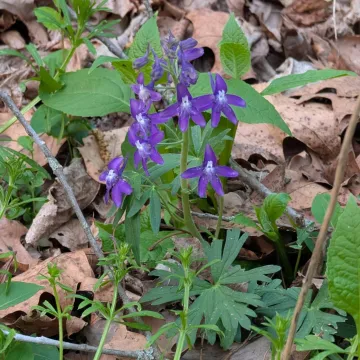
Dwarf larkspur
Delphinium tricorne
Description
Dwarf larkspur (Delphinium tricorne) is a perennial herb belonging to the Ranunculaceae family. It is a distinctive wildflower known for its early blooming period and vibrant coloration, making it a sought-after species for specialized woodland gardening and native plant enthusiasts.
The species is native to North America, particularly distributed across the eastern and central regions of the United States. It typically thrives in moist, deciduous forests, often appearing on slopes and ravines where the soil remains rich in leaf mold and organic matter throughout the early growing season.
Botanically, this plant is characterized by a short stature, usually reaching heights between 12 to 24 inches. The foliage is deeply divided into narrow segments, and the flowers, which appear in late spring, display a range of deep blue, violet, or sometimes white hues. The unique shape of the sepals gives the plant its common name and specific aesthetic appeal.
To cultivate Delphinium tricorne successfully, gardeners should mimic the woodland environment. This implies providing soil that is high in organic content, well-drained, yet consistently moist. It is critical to select a site that provides dappled shade, as the plant prefers cooler temperatures and avoids harsh, direct afternoon summer sun.
Key cultivation and maintenance guidelines include:
- Planting in locations where leaf litter can provide natural insulation.
- Avoiding waterlogged soil, which can cause crown rot during the plant's summer dormancy.
- Monitoring for common garden pests, such as slugs, which can damage new shoots in spring.
- Minimal fertilization, as the plant is adapted to nutrient-cycling forest soils.
In terms of хозяйственное (practical) utility, the dwarf larkspur serves exclusively as an ornamental and ecological plant. It is highly valued for supporting early-season pollinators like bumblebees. Because all parts of the plant contain toxic alkaloids, it is rarely grazed by wildlife, which enhances its survival rate in naturalized garden settings.
Photo gallery