Poison larkspur
Delphinium trolliifolium
Description
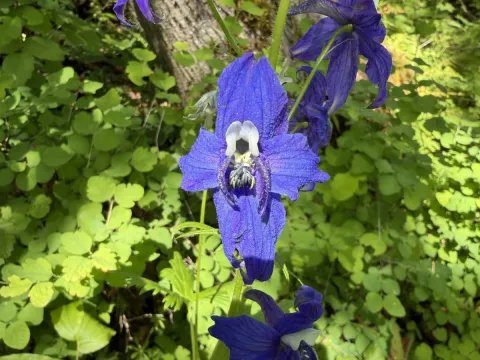
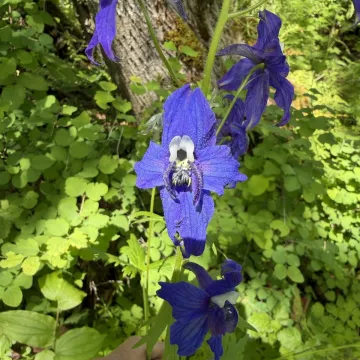
Poison larkspur (Delphinium trolliifolium) is a perennial herbaceous plant belonging to the Ranunculaceae family. It is a distinctive species native to the Pacific Northwest of North America, prized by collectors for its unique leaf morphology and striking deep blue to violet inflorescences that contrast sharply with its natural woodland environment.
The native habitat of Delphinium trolliifolium includes moist, forested slopes and riparian zones. Because it has evolved in these specific niches, the plant is naturally adapted to cool, humid conditions, making it an excellent choice for shaded or semi-shaded garden areas where high soil moisture is maintained throughout the growing season.
The botanical characteristics of this species include a tall, upright habit and palmate-lobed leaves that resemble the foliage of globeflowers (Trollius), which serves as the namesake for the species. The root system is robust, allowing the plant to remain dormant during the winter and emerge reliably each spring to produce its characteristically nectar-rich flowers.
Cultivation success relies on mimicking its natural forest-floor environment. The species thrives in fertile, moisture-retentive, yet well-drained soils. In a horticultural setting, providing dappled shade is essential, as the plant is susceptible to heat stress and foliage scorch if exposed to intense, direct afternoon sun for prolonged periods.
In landscape design, it is primarily used in woodland gardens or shade-tolerant borders. Beyond aesthetic value, it serves as a nectar source for local pollinators. Common challenges include slugs and snails in the spring, as well as powdery mildew if the plants are situated in areas with poor air circulation or stagnant humidity.
- Preference for cool, moist woodland soils.
- Requirement for partial shade to full shade conditions.
- Susceptibility to moisture-loving garden pests like slugs.
- Benefit from organic mulch to keep roots cool.
- High aesthetic value in naturalistic or shade garden designs.
Photo gallery