Island tree poppy
Dendromecon harfordii
Description
The Island tree poppy (Dendromecon harfordii) is an evergreen woody shrub belonging to the Papaveraceae family. Unlike most poppy family members, which are herbaceous, this specific species develops a sturdy, wood-like structure, allowing it to grow into a substantial shrub reaching heights of up to 4 meters.
The species originates from the Channel Islands off the coast of California. It has evolved to thrive in Mediterranean climates, characterized by hot, dry summers and mild, wet winters. Because of its native environment, it is best suited for cultivation in regions that mimic these conditions, avoiding severe frost exposure.
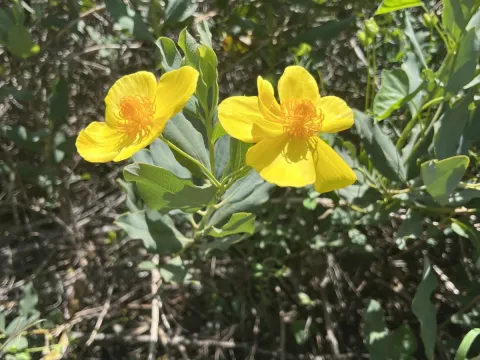
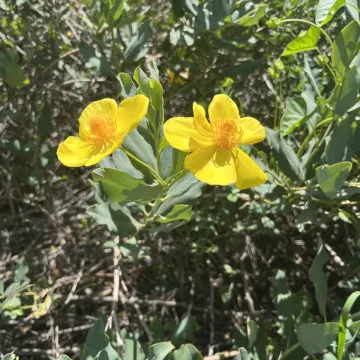
Botanically, the plant is recognized by its leathery, lanceolate leaves with a glaucous, bluish-green hue. It produces large, vibrant yellow four-petaled flowers that resemble typical poppy blooms. These flowers provide a striking contrast against the dark, leathery foliage, usually appearing in late spring through early summer.
Regarding its horticultural requirements, drainage is the most critical factor for success. The soil should be gritty, well-draining, and relatively low in nutrients to prevent root rot. Once established, the Island tree poppy is remarkably drought-tolerant and requires minimal irrigation, making it an excellent choice for water-wise gardens and dry landscapes.
The primary use of Dendromecon harfordii is in ornamental landscaping, particularly in xeriscaping projects. It serves as an excellent focal point or evergreen screen in frost-free gardens. Common problems include root rot pathogens if the soil is too wet, while pests are generally limited to occasional aphid or mite infestations, which are usually managed with simple garden care practices.
Photo gallery