Dendropemon purpureus
Dendropemon purpureus
Description
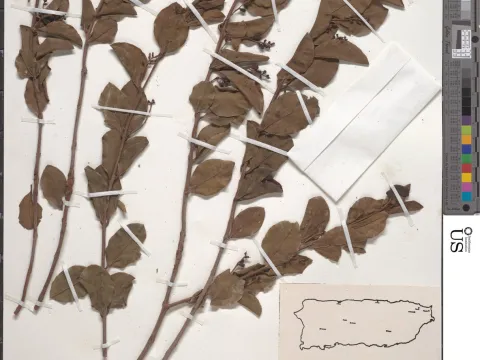
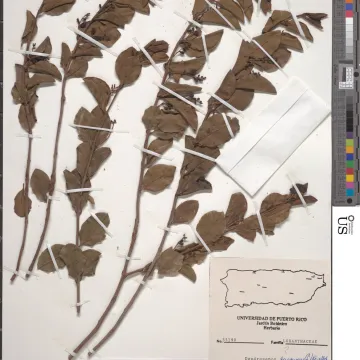
Dendropemon purpureus is an evergreen, hemi-parasitic shrub belonging to the Loranthaceae family. Like other members of its family, it functions as an epiphyte, colonizing the branches of various host trees. By developing specialized structures known as haustoria, it penetrates the xylem and phloem of the host to extract water and essential nutrients, maintaining its growth independently of the soil.
The native range of this species is primarily located within the Caribbean basin, including islands like Cuba and Hispaniola. It thrives in tropical and subtropical forest ecosystems where high atmospheric humidity supports its metabolic needs. As a niche plant, it occupies specific ecological roles, interacting closely with the canopy structure of its host trees.
Botanically, the species is recognized by its coriaceous (leathery) leaves and distinct, vibrant purple-to-reddish flowers. These floral structures are evolutionarily adapted to avian pollinators, such as hummingbirds, which are essential for fertilization. The fruit is typically a berry with a sticky exocarp, facilitating seed dispersal through birds that carry the seeds to new host branches.
While not classified as a commercial crop, Dendropemon purpureus is significant in horticultural and forestry management. In environments where it grows unchecked, it can act as a pest, causing vigor loss in fruit trees or ornamental species. Effective management requires constant surveillance and manual intervention to maintain the health of the host tree population.
- Relies on host trees for water and mineral intake.
- Ornithochory (bird-mediated seed dispersal).
- High resistance to environmental fluctuations.
- Requires targeted pruning to mitigate impact.
The primary control strategy involves the early detection and mechanical excision of the parasitic clusters. Because the plant relies on the host's vascular system, chemical treatment is often impractical due to the risk of phytotoxicity to the host. Consistent canopy management and thinning are considered the best practices for preventing the spread of this parasite in cultivated areas.
Photo gallery