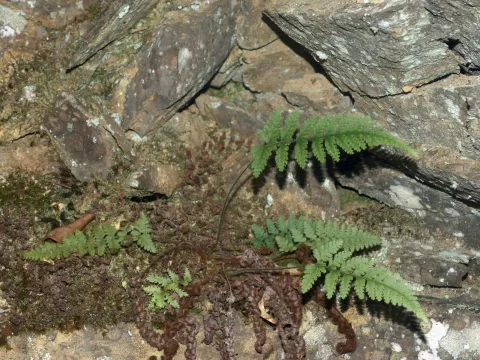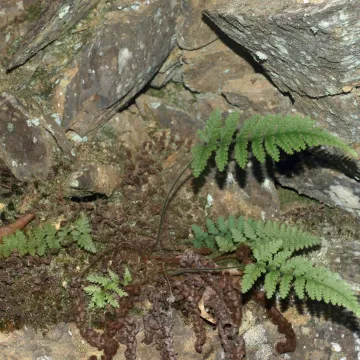
Dennstaedtia hirsuta
Dennstaedtia hirsuta
Description
Dennstaedtia hirsuta, commonly known as the hairy cup fern, belongs to the family Dennstaedtiaceae. This perennial fern is recognized for its unique texture and its ability to spread through rhizomes, creating lush, green ground cover in appropriate settings. It is a popular choice for gardeners focusing on woodland or shade-loving plant collections.
The native range of this species is primarily centered in East Asia, including regions across China, Japan, and the Korean Peninsula. Naturally inhabiting cool, moist forest floors, the plant has evolved to thrive in environments that provide consistent shade and protection from the harsh elements, which dictates its specific needs when brought into cultivation.
Botanically, the species is defined by its hairy, finely divided fronds, which contribute to its distinctive common name. Its growth pattern is characterized by long, creeping rhizomes that allow the plant to colonize open spaces efficiently. The reproductive structures, known as sori, are strategically placed on the underside of the leaves, protected by cup-like membranes characteristic of the genus.
For successful cultivation, Dennstaedtia hirsuta requires a soil mix rich in organic matter that remains consistently moist but not waterlogged. It thrives in locations with partial to deep shade and high humidity levels. Gardeners must ensure proper drainage to prevent root rot, while supplemental irrigation is essential during dry spells to maintain the turgor of the delicate fronds.
- Requires high humidity and consistent moisture.
- Thrives in organic-rich, acidic to neutral soil.
- Sensitive to direct sunlight and dry air.
- Can be propagated by rhizome division.
The primary use of this fern is in ornamental landscaping, particularly for shaded garden beds or humid terrariums. Like many ferns, it is susceptible to typical pests such as spider mites, aphids, and scale insects if the environment becomes too dry. Preventing fungal diseases requires careful monitoring of irrigation practices and maintaining good airflow around the foliage.
Photo gallery