Tansy mustard
Descurainia pinnata (Walter) Britton
Description
Tansy mustard (Descurainia pinnata) is an annual herbaceous plant belonging to the Brassicaceae family. In agricultural contexts, it is widely recognized as a weed that infests cropland, pastures, and disturbed lands. Its presence can significantly impact the yield of primary crops by competing for soil moisture and essential nutrients during the critical early growth stages of cultivated plants.
The species is native to North America and demonstrates an impressive geographical range, extending across various climatic zones. Its ability to thrive in diverse environments, ranging from semi-arid plains to well-watered meadows, makes it a resilient plant that readily colonizes agricultural fields, often serving as a secondary host for various pests and pathogens that threaten commercial crops.
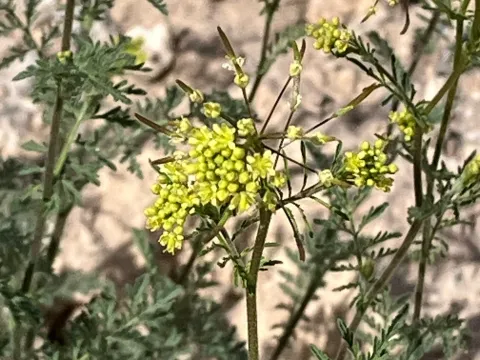
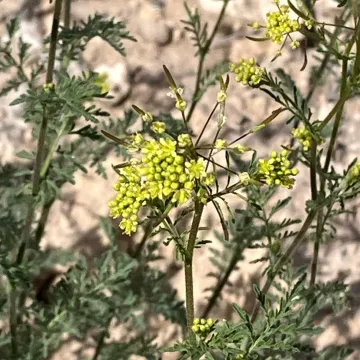
Botanically, Descurainia pinnata is distinguished by its finely dissected, fern-like leaves and stems covered in fine trichomes. It produces small, yellow flowers arranged in racemes, which eventually develop into elongated siliques containing numerous seeds. These seeds possess high dormancy, allowing the plant to persist in the soil seed bank for extended periods until environmental conditions become optimal for germination.
Regarding cultivation and habitat requirements, the plant prefers well-drained, sandy or loamy soils. It is remarkably drought-tolerant, which often gives it a competitive edge over crops in regions with erratic rainfall. Agronomic management typically involves a combination of mechanical tillage to disrupt young rosettes and the strategic application of post-emergence herbicides, ensuring that control measures are implemented before the plant reaches the bolting stage.
Beyond its reputation as a weed, the plant plays a role in the local ecosystem by providing early-season nectar for various pollinators. However, it is also known to harbor diseases such as bacterial leaf spot or fungal infections that can spread to other cruciferous crops. Understanding the biology of this species is essential for integrated weed management (IWM) programs aimed at maintaining high agricultural productivity.
- Rapid growth cycle
- High seed production potential
- Adaptability to various soil textures
- Cross-pollination and self-pollination capability
Photo gallery