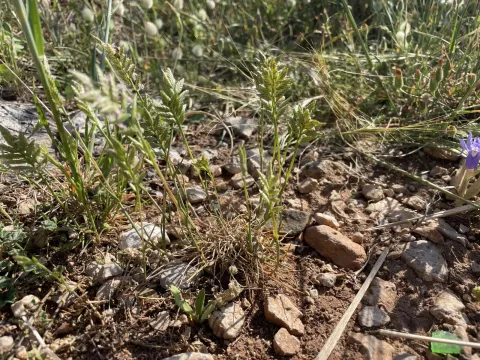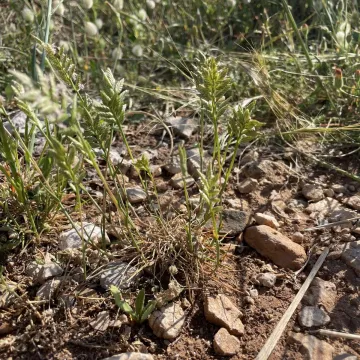
Desmazeria sicula
Desmazeria sicula
Description
Desmazeria sicula is a herbaceous plant species belonging to the Poaceae family. Known for its resilience in Mediterranean climates, this grass is a subject of interest in agricultural studies focusing on plant adaptation to abiotic stress, particularly salinity and drought.
The plant originates from the Mediterranean region, including Sicily and various coastal areas across Southern Europe and North Africa. Its natural habitat is characterized by sandy or rocky substrates, where it serves as a colonizing species capable of withstanding the harsh conditions of coastal environments.
Botanically, the species is defined by its stiff, often involute leaves and dense, spike-like panicles. The plant's morphology is highly specialized to minimize transpirational water loss. Its root system is fibrous and deep-reaching, providing the stability necessary for survival in shifting coastal soils.
Agricultural cultivation requires well-drained soil conditions. Given its evolutionary history, the plant does not tolerate waterlogging, and it thrives in alkaline or neutral soils with low nutrient content. Minimal agrotechnical intervention is required, as the species is naturally suited to poor, sandy environments where intensive fertilization would be counterproductive.
In terms of practical usage, Desmazeria sicula is primarily utilized for soil erosion control and land rehabilitation. It is frequently employed in projects to stabilize dune systems or to provide ground cover in arid, salt-affected landscapes. While it is rarely threatened by agricultural pests, like any grass, it may be susceptible to root rot if placed in unsuitable, excessively moist environments.
- Salt tolerance
- Drought resistance
- Erosion prevention
- Low fertilizer requirement
- Coastal habitat adaptation
Photo gallery