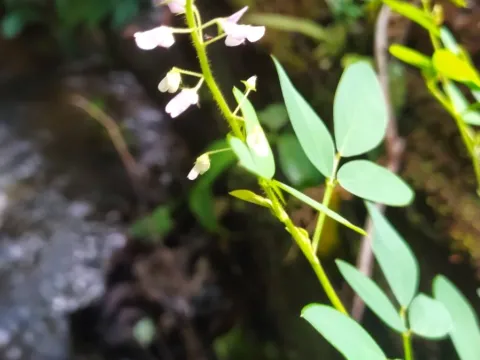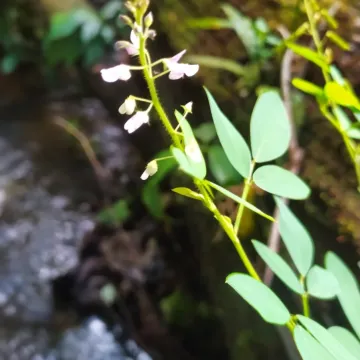
Desmodium adscendens
Desmodium adscendens
Description
Desmodium adscendens is a perennial herb belonging to the Fabaceae family. It is a creeping or ascending shrub often valued in agriculture for its hardiness and ability to act as a ground cover plant. This species is recognized for its significant physiological role in nitrogen fixation within various tropical ecosystems.
The plant is native to the tropical regions of West Africa and South America. Its natural range encompasses rainforest margins, open savannas, and disturbed habitats. Due to its adaptation to warm and humid climates, it has become an important subject for research regarding the restoration of degraded tropical soils and the development of sustainable agroforestry practices.
Botanically, it features trifoliate leaves and small, delicate flowers arranged in racemes. The fruit is a segmented legume pod that splits into individual pieces, aiding in its dispersal. A primary feature of its root system is the formation of nodules that house nitrogen-fixing bacteria, which significantly improves the soil profile and nutrient cycling for neighboring crops.
Successful cultivation of this species requires careful consideration of soil quality and climate. It thrives best in well-drained, fertile soils with a pH ranging from slightly acidic to neutral. Agricultural techniques involve ensuring sufficient sunlight, consistent moisture management, and protection from competing weeds during the initial stages of establishment to ensure a healthy yield.
The хозяйственное usage of Desmodium adscendens includes:
- Production of herbal remedies targeting hepatic and inflammatory issues.
- Soil enrichment through nitrogen fixation and erosion control on sloped farmlands.
- Supplemental forage for livestock, particularly in subsistence farming systems.
Common agricultural challenges include susceptibility to fungal infections, particularly root rot, which typically occurs in poorly drained or waterlogged environments. Pest management focuses on controlling leaf-eating insects through standard integrated pest management practices. Regular monitoring of crop health and maintaining appropriate drainage are essential for preventing losses and ensuring long-term crop vitality.
Photo gallery