
Desmodium asperum
Desmodium asperum
Description
Desmodium asperum is a vigorous perennial legume belonging to the Fabaceae family. Known for its robust growth and high biomass production, this species serves as a critical asset for forage systems, especially in tropical and subtropical regions where high-quality protein sources are essential for livestock.
The plant is native to South and Central America, thriving in warm, humid climates. Its ability to colonize diverse environments has made it a subject of interest for agricultural researchers aiming to improve pastures in regions where traditional clover or alfalfa varieties may not perform as effectively due to climatic constraints.
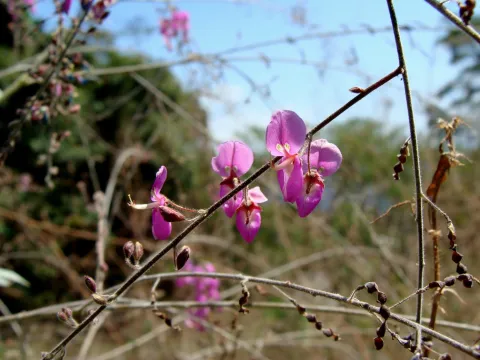
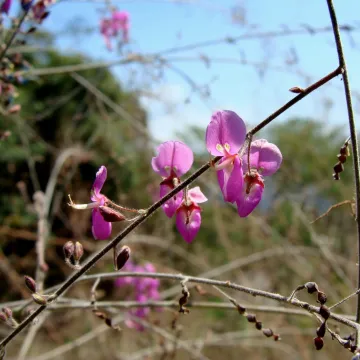
Botanically, Desmodium asperum is characterized by its trifoliate leaves and stems covered with rigid, rough hairs, from which its name is derived. The plant develops a resilient root system that aids in soil stabilization. Its flowers are typically small and form in terminal racemes, eventually producing jointed pods that are characteristic of the genus.
Successful cultivation requires well-drained soil and adequate sunlight. While it is somewhat tolerant of acidic soils, it performs best when fertility levels are managed. Proper agronomic management, including weed control during the establishment phase, is necessary to maximize yields. The crop responds well to rotational grazing and mechanical harvesting.
In terms of agricultural utility, this plant is primarily used as a high-protein fodder source. It provides excellent forage for cattle and other ruminants, contributing to better weight gain and milk production. Beyond fodder, it is valued for its nitrogen-fixing capabilities and is often planted as a cover crop to prevent soil erosion and improve nutrient cycling.
- Excellent forage quality
- Natural nitrogen fixation
- Erosion control properties
- High biomass production
Photo gallery