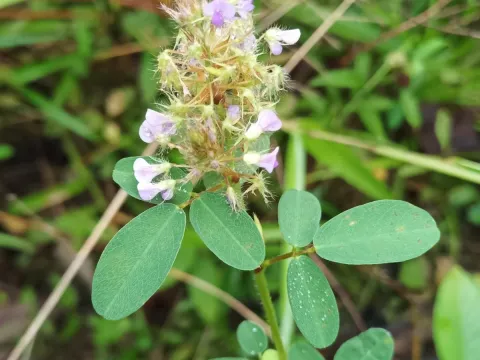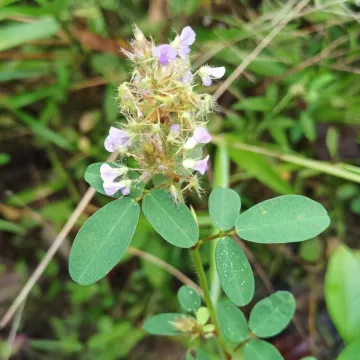
Desmodium barbatum
Desmodium barbatum
Description
Desmodium barbatum is a perennial herbaceous plant belonging to the Fabaceae family. This species is widely recognized in agricultural circles for its value as a forage crop and its significant ability to improve soil quality through nitrogen fixation, common in various tropical ecosystems.
The plant is native to the tropical regions of Central and South America, as well as parts of Africa and Asia. It thrives in warm, humid climates, showing resilience in diverse soil types, provided that the drainage is adequate and there is sufficient exposure to direct sunlight.
Botanically, Desmodium barbatum features pubescent stems and trifoliate leaves, which assist in reducing transpiration. The plant produces small, typically purple or white flowers arranged in racemes. Its root system is deep and complex, allowing the plant to reach groundwater reserves during drier spells, which makes it a robust choice for sustainable farming.
Cultivation practices require preparing a fine seedbed and ensuring optimal soil pH, generally between 5.5 and 7.0. The crop is sensitive to initial competition from weeds; therefore, mechanical weeding or the use of pre-emergent methods is advisable. Once established, the stand becomes competitive and capable of suppressing weed growth effectively.
The agricultural and economic applications are diverse:
- Utilization as high-quality forage for cattle and livestock due to its protein content.
- Application as a cover crop for soil conservation and erosion control on hilly terrains.
- Incorporation into sustainable cropping systems to improve nitrogen levels.
- Use in local ethnomedicine and for environmental remediation projects.
Common phytosanitary issues include susceptibility to anthracnose during prolonged wet seasons and attacks by various coleopteran pests. Regular scouting and maintaining a balanced stand density are key management strategies for agricultural professionals to prevent large-scale damage and ensure long-term productivity of the crop fields.
Photo gallery