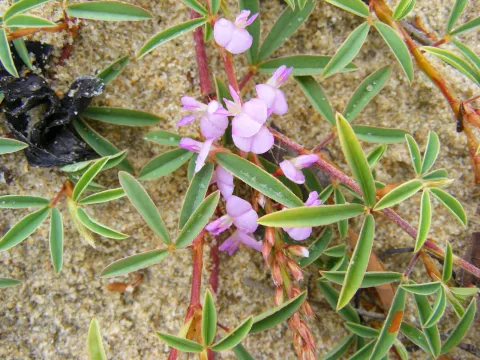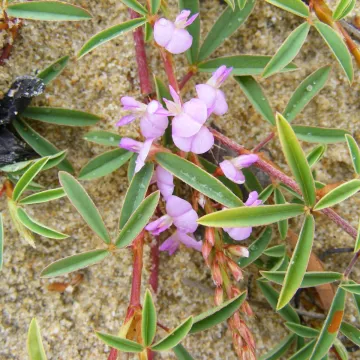
Desmodium biarticulatum
Desmodium biarticulatum
Description
Desmodium biarticulatum is a perennial leguminous plant belonging to the diverse Fabaceae family. Renowned for its resilience and nitrogen-fixing capabilities, this species plays a vital role in tropical ecosystems and serves as a valuable forage crop in various agricultural systems around the globe.
The plant originates from the tropical and subtropical regions of Asia and Australia. It typically thrives in open grasslands, light woodlands, and sandy coastal regions. Due to its adaptability to infertile soils, it has become an important subject for land restoration programs in regions where native vegetation has been degraded by intensive grazing.
Botanically, it is characterized by its trifoliate leaves and a unique fruit structure—a two-segmented pod that easily breaks apart upon maturity, which aids in seed dispersal. The plant often exhibits a prostrate or semi-erect growth habit, with a deep root system that allows it to survive periodic droughts, a trait highly valued in forage cultivation.
Climatically, Desmodium biarticulatum requires warm temperatures and full exposure to sunlight. It is intolerant of frost and waterlogged conditions, preferring well-drained, slightly acidic soils. Successful agrotechnology involves precise seedbed preparation and controlled grazing rotations to prevent over-exploitation of the young plants during their establishment phase.
The primary agricultural applications of this culture include:
- Provision of high-protein forage for livestock, particularly in pasture-based systems.
- Enhancement of soil fertility through biological nitrogen fixation.
- Control of soil erosion in sloped or fragile agricultural landscapes.
- Incorporation into sustainable crop rotation cycles to restore degraded land.
Common diseases affecting this crop include various leaf spot fungi and powdery mildew, which often flourish during high-humidity seasons. Pests such as leaf-eating beetles and pod-boring insects are known to cause significant damage to the plant's productivity. Effective management relies on proactive field scouting, the selection of disease-resistant varieties, and proper spacing to ensure adequate air circulation.
Photo gallery