
Littleleaf tick-trefoil
Desmodium ciliare
Description
Littleleaf tick-trefoil (Desmodium ciliare) is a perennial legume belonging to the Fabaceae family. It is a significant plant in various North American ecosystems, valued by agronomists and land managers for its ability to thrive in diverse environments while contributing to soil health and livestock nutrition.
The plant is native to the eastern and southern parts of the United States. Its natural habitat includes prairies, open woodlands, and disturbed areas. This distribution shows the plant's adaptability to various climate zones, allowing it to survive in areas with fluctuating seasonal moisture and temperature levels.
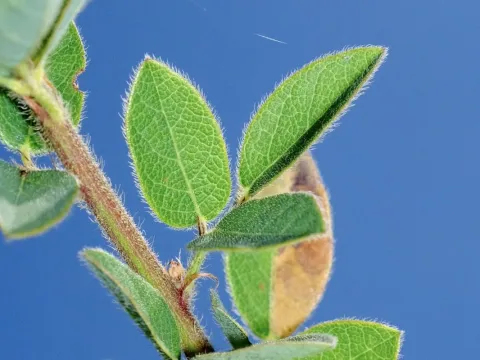
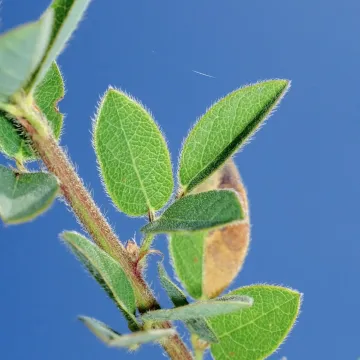
Botanically, Desmodium ciliare is recognized by its stems covered in fine, spreading hairs and its compound leaves with three leaflets. The flowers are typically small and range from pink to purple, eventually developing into distinctive jointed pods. These pods are known for their ability to adhere to clothing or animal fur, aiding in seed dispersal throughout the landscape.
For successful cultivation, this crop requires well-drained soil and adequate sun exposure. It performs best in soils that are not excessively compacted. Agronomic practices should focus on maintaining adequate phosphorus and potassium levels, as the plant relies on these nutrients to support its nitrogen-fixing symbiosis with rhizobia bacteria in the root system.
The agricultural importance of this species lies in its dual use as a forage plant and a soil improver. Cattle and wildlife frequently graze on its foliage, which provides essential proteins. Moreover, as a legume, it helps in restoring soil nitrogen levels, making it an excellent candidate for land reclamation projects and sustainable forage management strategies.
- High protein content for grazing livestock.
- Natural soil nitrogen enrichment.
- High level of adaptation to open woodland habitats.
- Effective species for erosion control.
Photo gallery