Panicled tick-trefoil
Desmodium paniculatum
Description
Panicled tick-trefoil (lat. Desmodium paniculatum) is a perennial herbaceous plant belonging to the Fabaceae family. Recognized for its ecological and agricultural benefits, this species is increasingly valued as a forage legume that helps maintain soil nitrogen levels while providing nutritious biomass for livestock.
The plant originates from North America, where it naturally thrives in open woodlands, prairies, and meadow habitats. Its cultivation range is steadily expanding in regions that experience moderate temperature fluctuations, as the plant exhibits strong resilience to environmental stresses and adapts well to various soil compositions.
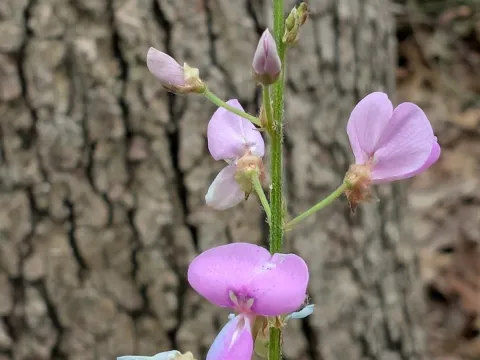
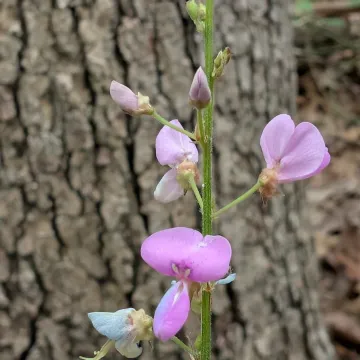
Botanically, the plant is characterized by erect stems and trifoliate leaves, producing distinctive paniculate inflorescences adorned with small purple to lavender flowers. The fruit consists of jointed pods equipped with hooked hairs, an evolutionary adaptation that facilitates seed dispersal by adhering to passing animals or human movement through the field.
For successful production, the crop requires well-drained soils ranging from loamy to sandy textures. It performs best under full sun or light shade conditions. Agronomic management involves site preparation that ensures good contact between seeds and the soil, followed by weed management during the establishment year to ensure the crop gains a competitive advantage.
- High-quality nutritional value for grazing cattle.
- Significant nitrogen-fixing potential for crop rotation.
- Resilience against moderate drought conditions.
- Excellent regrowth capabilities post-harvesting.
The primary agricultural utility of the plant lies in its use for hay production and as a perennial component in sustainable pasture systems. While generally hardy, the crop can be susceptible to common legume diseases like root rot in poorly drained fields and various lepidopteran pests, necessitating integrated pest management strategies to ensure healthy yields.
Photo gallery