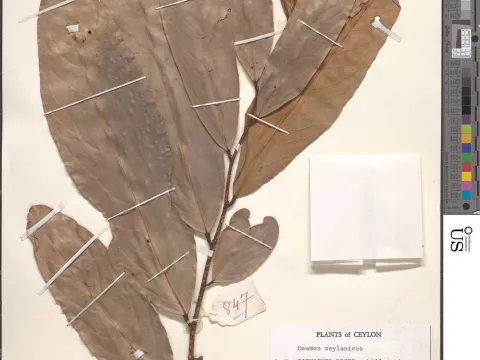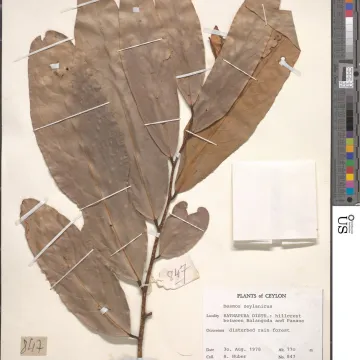
Desmos zeylanicus
Desmos zeylanicus
Description
Desmos zeylanicus is a perennial woody plant belonging to the Annonaceae family. Known for its aesthetic appeal and unique floral structure, this species is a representative of the diverse tropical vegetation found in South Asia. As a member of the Annonaceae, it shares some morphological similarities with other tropical trees and shrubs of this group, yet maintains distinct botanical traits.
The native range of this plant is primarily centered in Sri Lanka and parts of India, where it thrives in humid tropical environments. It is adapted to forest understories or areas with dense canopy cover, which provide the necessary shade and humidity for its development. The geographical distribution is limited by its intolerance to cold climates and drought.
From a botanical standpoint, Desmos zeylanicus features leathery, alternate leaves and distinctive, often fragrant flowers. These blooms rely on specific insect vectors for pollination, which is a common strategy within its family. The plant's growth pattern is characterized by steady development, requiring consistent environmental conditions to maintain its health and structural integrity.
Cultivation requirements are strict, focusing on soil and climate management. The soil must be rich in organic matter, slightly acidic, and exceptionally well-draining to prevent root issues. Temperature stability is paramount, ideally maintained between 22°C and 28°C. In controlled environments, high atmospheric humidity is essential, often requiring misting systems or greenhouse cultivation.
The economic and practical usage of the plant includes:
- Ornamental landscaping in tropical climates.
- Conservation of rare botanical species in greenhouses.
- Research interest due to the diverse chemical profiles of the Annonaceae family.
Common pests include spider mites and mealybugs, which are particularly troublesome in low-humidity environments. Root rot remains the most significant risk, usually triggered by poor drainage or overwatering. Maintaining a balanced fertilization schedule and monitoring foliage for signs of infestation are key to successful management of this species.
Photo gallery