Desmostachya bipinnata
Desmostachya bipinnata (L.) Stapf
Description
Desmostachya bipinnata, commonly known as salt reed grass or halfa grass, is a perennial grass belonging to the Poaceae family. It is a highly resilient species, well-adapted to surviving in some of the most challenging environments on Earth, including arid and semi-arid deserts.
Native to parts of North and East Africa, as well as the Middle East and the Indian subcontinent, this plant has evolved to dominate harsh ecosystems. It is frequently found on sandy plains and saline soils, where few other plant species can thrive due to high salinity and water scarcity.
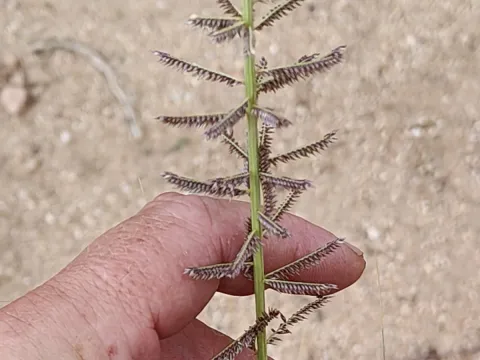
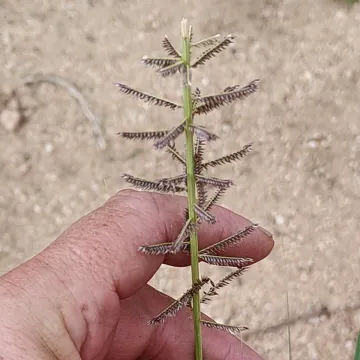
Botanically, the plant is characterized by its deep, extensive rhizome system, which provides exceptional soil stability. Its leaves are tough, linear, and often serrated, protecting the plant against excessive transpiration. The flowering stems grow upright, bearing long, narrow panicles that are resilient to wind and heat.
From an agronomical perspective, Desmostachya bipinnata is prized for its extreme drought and salinity tolerance. It requires minimal cultivation and fertilization, making it a low-input crop. The plant is remarkably resistant to typical agricultural pests and diseases, largely due to its high silica content which acts as a natural deterrent.
The economic and agricultural utility of this species includes:
- Serving as a valuable source of forage for hardy livestock such as camels and goats.
- Playing a critical role in phytoremediation and soil conservation efforts against wind erosion.
- Providing raw materials for traditional crafts and mat weaving.
- Potential for industrial application in paper pulp production due to its fibrous structure.
Photo gallery