Dialium guianense
Dialium guianense
Description
Dialium guianense, commonly known as the velvet tamarind or tropical blackwood, is a significant tree species within the Fabaceae family. It is recognized for its robust growth habit and its role as a key species in tropical rainforest environments. The tree exhibits excellent adaptability to diverse environmental conditions within its native range.
Originating from Central and South America, the species thrives in regions spanning from Mexico to the Amazon basin. It requires a humid tropical climate to reach its full potential, typically growing in areas with high annual rainfall. As a native to tropical ecosystems, it is well-adapted to competitive forest environments.
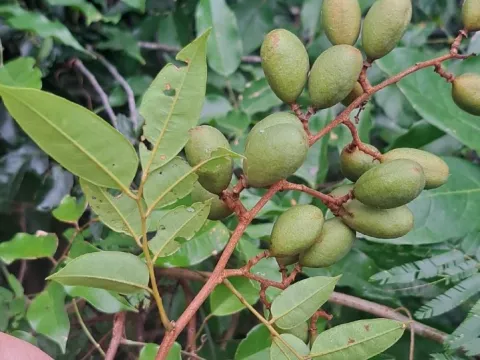
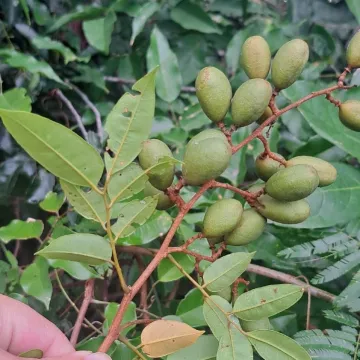
Botanically, the tree features compound leaves and dense panicles of small flowers. Its fruit is a pod covered with characteristic brown, velvety hair, containing a pulp that is widely prized for its sweet and tangy flavor. The timber produced by the tree is known for its remarkable density, hardness, and resistance to environmental degradation.
Regarding agrotechnical requirements, the species performs best in well-drained, nutrient-rich soils. While it can withstand various soil types, waterlogging must be avoided to prevent root diseases. In nursery conditions, seeds require scarification to enhance germination rates, and young plants benefit from controlled light levels.
The primary economic value of Dialium guianense lies in its high-quality hardwood, which is heavily utilized for construction, flooring, and fine furniture making. Additionally, the fruit is harvested for local consumption and has potential for broader agricultural development. The plant is also studied for various medicinal properties derived from its bark and leaves.
- Highly durable and dense timber
- Nutritious and flavorful fruit
- Significant ecological footprint in reforestation
- Adaptability to tropical soil profiles
Photo gallery