Flax lily
Dianella revoluta R. Br.
Description
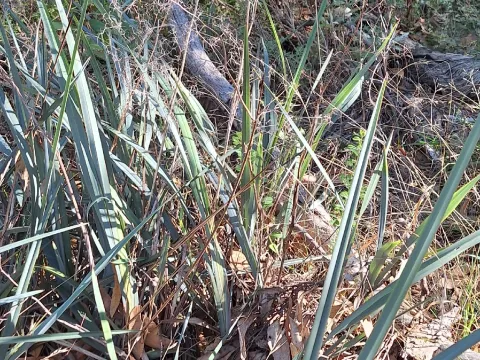
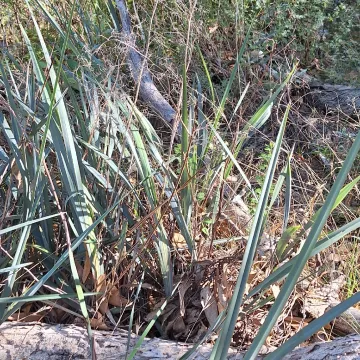
Flax lily (Dianella revoluta R. Br.) is a hardy perennial herb belonging to the Asphodelaceae family. Known for its grass-like appearance and robust nature, it forms dense clumps of foliage that maintain visual interest throughout the year. It has become a staple in modern landscaping due to its structural elegance and minimal maintenance needs.
Native to Australia, the species is widespread across diverse environments, from coastal dunes to arid sclerophyll forests. Its natural habitat has shaped the plant’s resilience, allowing it to thrive in nutrient-poor soils and withstand significant periods of water scarcity. These traits make it an excellent candidate for xeriscaping and sustainable planting projects in temperate and Mediterranean climates.
Botanically, Dianella revoluta features long, linear leaves with revolute (rolled-back) margins, which provide the plant with its specific texture and strength. The flowers are small, star-shaped, and typically range from shades of blue to violet, appearing on stalks that rise above the foliage. Following flowering, the plant produces attractive, dark blue glossy berries that are highly ornamental.
Agronomically, success in cultivation depends on providing well-draining soil and adequate spacing to allow for airflow. While it is adaptable to various light conditions, full sun to partial shade is optimal for maximizing the plant's growth and flowering performance. Established plants require very little intervention, requiring only occasional clearing of dead foliage to maintain health and aesthetic appeal.
Beyond its ornamental value, the plant plays a role in erosion control on slopes due to its fibrous root system. While generally resistant to major pests, growers should monitor for root rot if the soil remains waterlogged. Occasionally, mollusks such as slugs and snails may graze on young shoots, necessitating integrated pest management strategies in particularly damp or shaded areas of the garden.
Photo gallery