
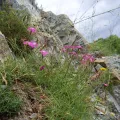
Acantholimon-leaved pink
Dianthus acantholimonoides
Description
The Acantholimon-leaved pink (Dianthus acantholimonoides) is a distinct perennial plant species belonging to the Caryophyllaceae family. Known for its compact habit, it stands out due to its rigid, succulent-like leaves that resemble the growth patterns of the Acantholimon genus, creating a dense, cushion-like structure.
This species is native to the high-altitude rocky regions of Asia Minor. Its natural habitat consists of screes, rocky slopes, and harsh mountainous environments where the plant has evolved to withstand intense solar radiation, temperature fluctuations, and severe water scarcity during the active vegetation season.
Botanically, the plant is characterized by its sessile, needle-like leaves organized into tight rosettes. The flowering stems are typically short and sturdy, topped with singular, classic Dianthus-shaped flowers that range from pale pink to white, providing a striking contrast to the greyish-green foliage characteristic of the species.
Cultivation requires careful attention to soil composition. To ensure successful growth, the plant demands a fast-draining, mineral-rich substrate. Agricultural practices should focus on replicating alpine conditions, avoiding organic-rich or moisture-retentive soils that may promote root pathogens and lead to the rapid decline of the plant.
- Maximum sun exposure is required for healthy growth.
- Extremely limited irrigation, especially during the dormant season.
- Application of specialized grit to keep the foliage off damp soil.
- Neutral to slightly alkaline pH levels in the planting medium.
In terms of practical use, the Acantholimon-leaved pink is highly prized in horticultural circles as a specimen plant for rock gardens and crevice plantings. Its slow growth rate and unique form make it an ideal choice for collectors of alpine flora and sustainable, low-maintenance landscape designs.
Common health issues often involve fungal infections that stem from improper drainage or humid conditions. Growers should monitor for aphids and spider mites, particularly in greenhouses or during stagnant weather. Maintaining good airflow around the rosettes is the most effective cultural method to prevent pest and disease outbreaks.
Photo gallery