Deptford pink
Dianthus armeria
Description
Deptford pink (Latin: Dianthus armeria) is an annual or biennial herbaceous plant belonging to the Caryophyllaceae family. It is recognized for its slender, elegant habit and its adaptability to various growing conditions, making it a valuable addition to both manicured landscapes and naturalistic wild meadows.
Originating in Europe, this species has naturalized widely in temperate zones across North America and other regions. It thrives in open, sunny habitats such as grassy meadows, forest edges, and rocky slopes, demonstrating a remarkable resilience to poor soil quality and periods of moderate water stress.
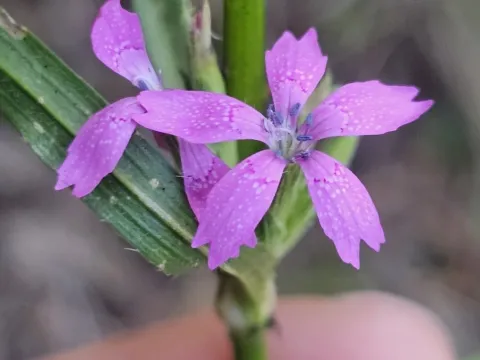
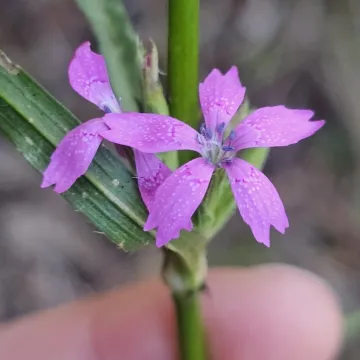
Botanically, the plant features an erect, hirsute stem reaching 20 to 50 cm in height. The foliage is narrow and linear, providing a delicate contrast to the vibrant, small pink or reddish flowers. The blooms are grouped in compact, head-like clusters surrounded by prominent bracts, which distinguishes it from other Dianthus species.
Cultivation of Deptford pink requires minimal intervention if the site is chosen correctly. It prefers full sun exposure and well-draining soils with a neutral or slightly alkaline pH. Sowing seeds directly into the soil in early spring is the standard practice. While the plant is hardy, regular weeding is essential during the early stages of establishment to prevent competition.
Its primary agricultural and horticultural uses include:
- Enhancing biodiversity in meadow plantings.
- Designing borders and rock gardens.
- Stabilizing light or gravelly soils in landscape projects.
- Acting as a nectar source for bees and various pollinating insects.
Pathological concerns involve fungal infections such as rust and Fusarium wilt, typically triggered by high humidity and stagnant air. Common pests, including aphids and spider mites, can affect the plant during dry spells. Management strategies focus on avoiding overhead irrigation and ensuring proper spacing between plants to maximize airflow.
Photo gallery