Balbis' pink
Dianthus balbisii
Description
Balbis' pink (Dianthus balbisii) is a distinctive perennial herbaceous plant belonging to the Caryophyllaceae family. Known for its compact habit and vibrant flowering, this species serves as a valuable asset for rock gardens, gravel beds, and borders, thriving in conditions that mimic its wild Mediterranean habitat.
The origin of this species is traced to Southern Europe, particularly the Balkan Peninsula and Italy. In its natural environment, it typically occupies open, dry meadows and limestone outcrops, which reflects its evolved ability to withstand nutrient-poor soils and periods of seasonal drought.
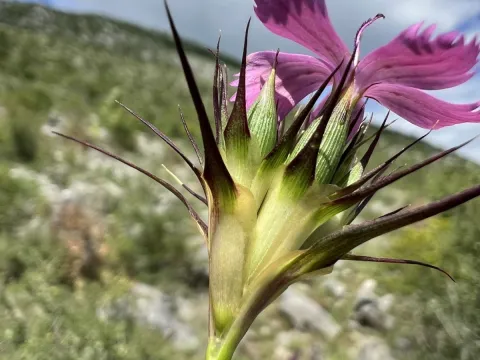
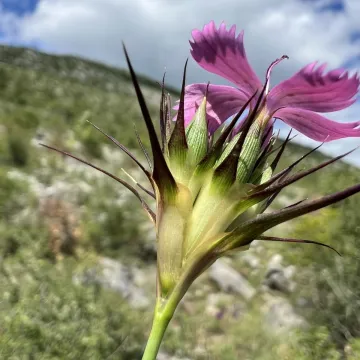
Botanically, Dianthus balbisii features slender, glaucous leaves and stems reaching up to 60 cm in height. The flowers are arranged in terminal clusters, exhibiting shades ranging from deep pink to purple. The calyx structure is a specific diagnostic feature of the species, distinguishing it from other closely related members of the genus.
Regarding climate and soil, the plant requires a sunny, well-ventilated position. It demands excellent soil drainage to survive; heavy, water-logged soils are detrimental to its root system. It prefers neutral to slightly alkaline pH levels, making it ideal for limestone-based or rocky soil compositions.
Cultivation success depends on following professional agronomic guidelines:
- Plant in full sun to ensure maximum flower production and strong stems.
- Ensure moderate watering schedules, allowing the soil to dry out between applications.
- Avoid over-fertilizing with nitrogen, which can lead to excessive green growth at the expense of flowers.
- Monitor for common pests, such as aphids or spider mites, during early spring and treat with appropriate organic or chemical controls.
Photo gallery