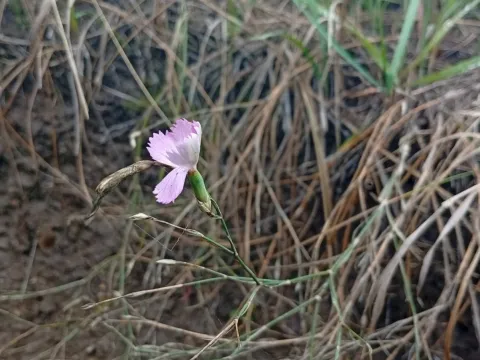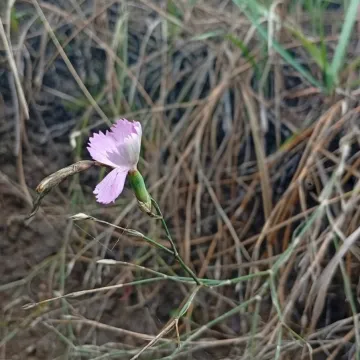
Field pink
Dianthus campestris
Description
Field pink (Dianthus campestris) is a perennial herbaceous plant belonging to the Caryophyllaceae family. Known for its resilience and adaptability, this species is frequently studied in the context of sustainable gardening and the preservation of grassland ecosystems, where it serves as a valuable botanical component.
The native range of this plant extends across the steppe and forest-steppe zones of Eurasia. It thrives in well-drained, nutrient-poor soils and is highly resistant to drought, making it an excellent candidate for landscape restoration projects and xeriscaping where traditional water-intensive crops fail to establish.
Botanically, Dianthus campestris is characterized by slender stems, linear leaves with a glaucous coating, and terminal flowers featuring serrated petals. The plant typically reaches heights between 20 and 50 cm. Its growth habit is compact, and the root system is fibrous and deep, which allows the plant to persist in harsh environments where moisture is limited.
Cultivation requirements include full sun exposure and soils with high permeability. The plant is particularly sensitive to waterlogging, necessitating the use of well-draining substrates or sloped planting sites. In agricultural settings, it requires minimal intervention, primarily focusing on weed suppression during the early establishment phase and ensuring the soil pH remains within the neutral to slightly alkaline range.
Agricultural and landscape applications include:
- Ornamental use in rock gardens and borders requiring low maintenance.
- Soil stabilization on embankments and marginal lands prone to erosion.
- Support for local biodiversity by providing habitats for pollinators.
- Potential use in pharmaceutical research due to the secondary metabolites present in the foliage.
Common plant health issues involve fungal infections such as rusts and mildews, particularly when air circulation is poor. Pest pressure from aphids or spider mites can fluctuate based on environmental conditions. Effective management involves maintaining optimal spacing between plants and utilizing integrated pest management strategies to ensure long-term sustainability of the planting site.
Photo gallery