Carthusian pink
Dianthus carthusianorum
Description
The Carthusian pink (Dianthus carthusianorum) is a herbaceous perennial plant belonging to the Caryophyllaceae family. Renowned for its resilient nature and striking floral display, this species has become a staple in ornamental horticulture, valued for its ability to thrive where other, more demanding plants might fail.
Native to Central and Southern Europe, this species is naturally adapted to rugged environments such as rocky slopes, dry meadows, and sparse woodlands. This evolutionary history has endowed the plant with significant hardiness, allowing it to withstand extreme temperature fluctuations and survive in nutrient-poor soils across diverse climatic regions.
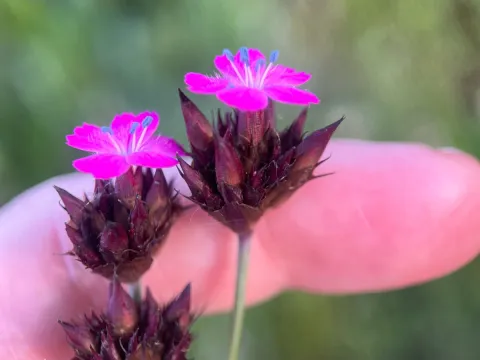
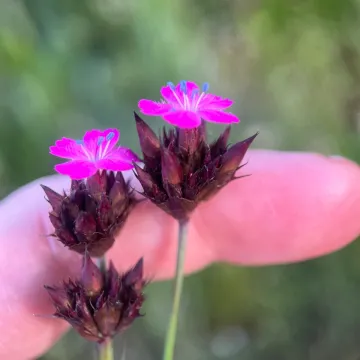
Botanically, the plant features slender, upright stems that typically reach heights of 20 to 50 cm. Its foliage consists of narrow, lance-shaped leaves of a deep green hue. The flowers, which appear during the summer months, are organized into dense, terminal clusters. They are characterized by their vibrant pink-to-purplish color and finely jagged petal margins, creating an elegant visual texture.
Cultivation requirements focus on mimicking its natural habitat. The plant demands full sun exposure and excellent soil drainage. Heavy, clay-based soils should be avoided or amended with grit. Once established, the Carthusian pink is notably drought-tolerant, requiring minimal irrigation. Maintenance is straightforward, primarily involving the pruning of spent flower heads to encourage prolonged blooming.
In terms of agricultural and horticultural use, this plant is a versatile choice for landscape architects. Its primary applications include:
- Rock gardens and stone wall plantings.
- Meadow-style landscaping and native flower borders.
- Xeriscaping, due to its low water requirements.
While generally robust, the plant can be susceptible to root rot if placed in waterlogged conditions. Pests such as aphids or spider mites may occasionally appear during prolonged dry spells, though they rarely cause significant economic damage in garden settings. Proper site selection remains the most effective method for maintaining a healthy and thriving display of this resilient species.
Photo gallery