
Fischer's Pink
Dianthus fischeri
Description
Fischer's Pink (Dianthus fischeri) is a perennial herbaceous plant belonging to the Caryophyllaceae family. This species is widely recognized for its resilience and adaptability, characteristics that are typical of many members within the Dianthus genus. It serves as a valuable specimen for both ornamental horticulture and as a subject for botanical studies due to its evolutionary adaptation to harsh environments.
Originating from the northern and eastern regions of Asia, the plant is primarily distributed across steppe and mountain landscapes. Its natural habitat is characterized by well-drained soils and high exposure to sunlight. These origins have endowed the species with high cold tolerance and the ability to thrive in poor soils, making it an excellent choice for low-maintenance landscaping projects in temperate climates.
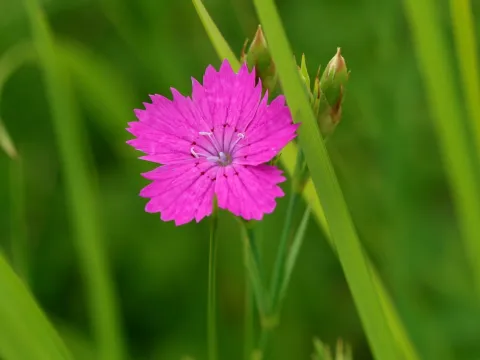
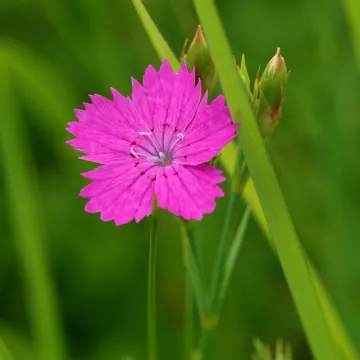
Botanically, the plant forms dense tufts of narrow, bluish-green leaves, providing a structural aesthetic even when not in bloom. The flowers are typically solitary, featuring fringed petals that exhibit shades of pink or violet, often emitting a delicate fragrance. The root system is robust and deep-seated, allowing the plant to withstand periods of low rainfall by accessing deeper moisture reserves within the soil profile.
The successful cultivation of Dianthus fischeri requires a site with full sun exposure and excellent soil drainage. Heavy or waterlogged soils should be avoided or amended with sand and gravel to prevent root rot. Watering should be deep but infrequent, allowing the top layer of soil to dry out between irrigation cycles. Fertilization with a balanced slow-release fertilizer in early spring supports the plant's overall vigor and floral development.
- Ornamental use: Rock gardens and gravel beds.
- Ground cover applications for sunny, slopes.
- Suitable for borders in Mediterranean-style gardens.
- Source material for breeding hardy Dianthus cultivars.
Regarding pests and diseases, the primary concerns include fungal issues like powdery mildew and Fusarium wilt, which are exacerbated by high humidity or poor air circulation. Common garden pests such as aphids and spider mites can occasionally affect the foliage. Maintaining proper plant spacing and ensuring good airflow are critical cultural practices for keeping the plants healthy and minimizing the need for chemical interventions.
Photo gallery