Giant pink
Dianthus giganteus
Description
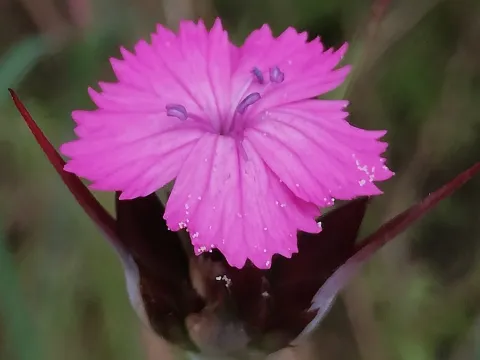
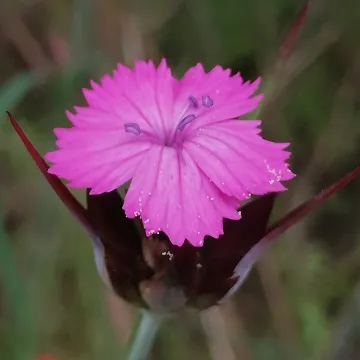
The giant pink (Dianthus giganteus) is a robust perennial herb belonging to the Caryophyllaceae family. Known for its imposing stature compared to other Dianthus species, it forms dense rosettes of foliage and produces strong, erect stems topped with compact, head-like clusters of vibrant flowers that provide significant ornamental value in any garden setting.
Native to Southern and Central Europe and the Balkan region, this species is well-adapted to rocky habitats and meadows. Its natural distribution spans areas with varying climatic conditions, reflecting the plant's inherent hardiness. It thrives in open, sunny locations where it can benefit from full solar exposure, which is essential for its structural integrity.
Botanically, the species is characterized by narrow, glaucous-green leaves and stem structures that can reach heights of up to 80 centimeters. The flowers are small, typically ranging from pink to deep purplish-red, and are tightly packed into clusters surrounded by dry, papery bracts. This unique arrangement gives the inflorescence its distinctive appearance.
Cultivation requirements involve providing well-draining, slightly alkaline soil. The plant is drought-tolerant once established and does not perform well in waterlogged or heavy clay conditions. Maintenance tasks include regular weeding in the spring and cutting back spent stems after the flowering period to encourage secondary growth and preserve the plant's vigor.
The giant pink is primarily used in landscaping for rock gardens, borders, and naturalistic garden designs. Its stiff, long-lasting inflorescences make it an excellent choice for fresh bouquets or as a component in dried flower arrangements. Furthermore, it serves as a valuable resource for local pollinators, including bees and butterflies, throughout the summer months.
- High resilience to frost and cold climates.
- Preference for calcareous, well-draining soils.
- Low nutritional requirements for healthy growth.
- Susceptibility to root rot if overwatered.
Photo gallery