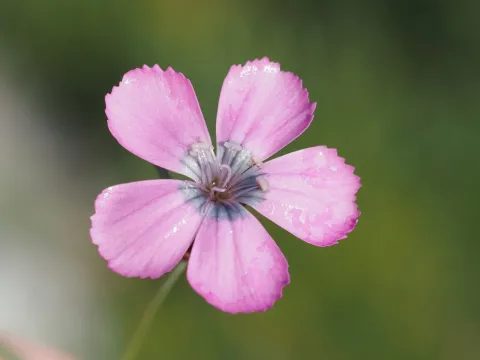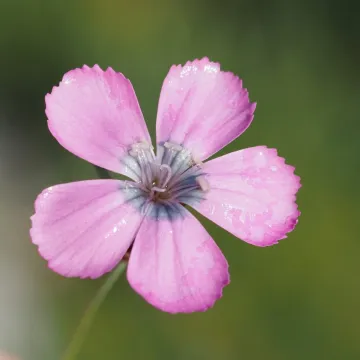
Peacock carnation
Dianthus pavonius
Description
The peacock carnation (Dianthus pavonius) is a perennial herbaceous plant belonging to the Caryophyllaceae family. It is highly regarded in horticulture for its compact growth habit and vibrant, eye-catching flowers, making it a staple for alpine gardens and specialized landscape projects.
Native to the mountainous regions of the Alps and Apennines, this species is naturally adapted to rugged, rocky environments. Its natural habitat is characterized by well-drained, nutrient-poor soils and high levels of solar radiation, which has shaped its resilient physiological profile.
Botanically, Dianthus pavonius forms dense, tufted mats of narrow, glaucous-green leaves. The solitary flowers, often featuring a distinct dark, peacock-like "eye" in the center of vivid pink or purple petals, bloom throughout the warmer months, providing high ornamental value.
Cultivation requirements demand attention to drainage and site selection. The plant thrives in neutral to alkaline soils with high mineral content. It is essential to avoid sites that experience waterlogging, as the root system is sensitive to prolonged moisture, which can lead to rapid decline in plant health.
Maintenance focuses on providing sufficient sunlight and preventing overcrowding to allow for adequate air circulation. While generally pest-resistant, the species is susceptible to root rots and fungal pathogens such as rust if growing conditions are too humid. Proper spacing and mineral mulching are key strategies for long-term success.
Photo gallery