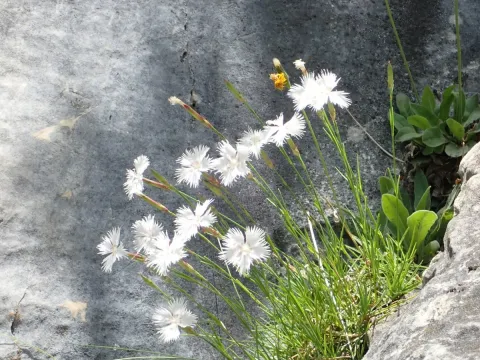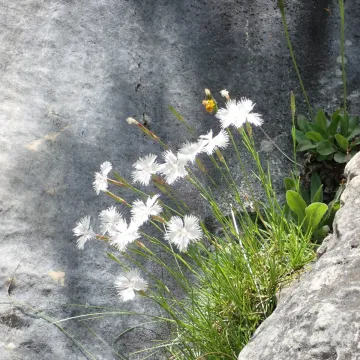
Rock carnation
Dianthus petraeus
Description
The rock carnation (Latin: Dianthus petraeus) is a perennial herbaceous plant belonging to the Caryophyllaceae family. This species is highly regarded for its compact, cushion-forming growth habit and delicate, fragrant flowers, making it an excellent candidate for ornamental horticulture, especially in alpine and rock garden settings.
The species is native to the mountainous regions of Southeastern Europe, including parts of the Balkan Peninsula and the Carpathians. Its natural habitat consists of rocky outcrops, limestone cliffs, and gravelly slopes, which has influenced its remarkable tolerance to low-nutrient substrates and fluctuating environmental conditions.
Botanically, Dianthus petraeus is defined by its narrow, glaucous leaves arranged in dense basal rosettes. The flowering stems grow to approximately 15–30 cm in height, bearing flowers with fringed petals. This structural morphology is an adaptation that allows the plant to thrive in exposed, wind-swept areas with minimal water retention.
Cultivation requirements for this crop focus on providing excellent drainage and sunlight. The rock carnation thrives in alkaline or neutral soils that mimic its natural stony environment. Over-fertilization, especially with nitrogen-rich compounds, is discouraged as it encourages leggy growth and reduces the plant's resistance to cold and diseases.
- Excellent cold hardiness suited for temperate climates.
- Requires a high-drainage environment to prevent root rot.
- Propagation is best achieved through seed sowing or careful division of established mats.
In terms of economic and practical use, the rock carnation is exclusively utilized in landscaping and floral design. It is frequently planted in rockeries, border fronts, and vertical landscaping applications where its ability to bind soil and withstand harsh conditions is highly valued. Its long bloom duration enhances its utility in both private and municipal gardening projects.
The primary horticultural challenges involve mitigating fungal diseases such as fusarium wilt and root decay caused by prolonged moisture. Pests such as aphids and spider mites can occasionally affect the plant in greenhouses or crowded conditions. Integrated pest management, including regular inspection and maintaining proper airflow, is essential for maintaining plant health.
Photo gallery