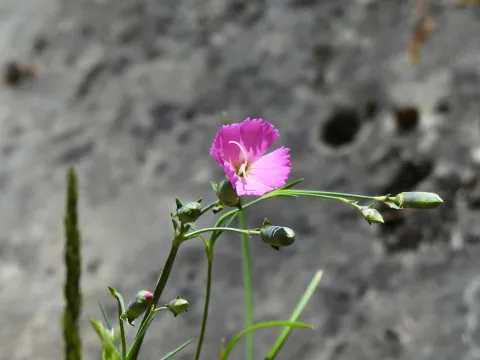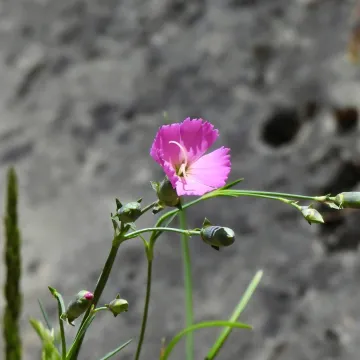
Wood pink
Dianthus sylvestris
Description
Wood pink (lat. Dianthus sylvestris) is a perennial herbaceous plant belonging to the Caryophyllaceae family. It is a highly valued ornamental crop, known for its elegant habit and ability to thrive in poor, rocky soils, making it a favorite for rock gardens and naturalistic plantings.
The plant originates from the mountainous regions of Europe. Its natural range demonstrates a preference for limestone substrates and well-drained, sunny locations. Due to its hardiness, it has been successfully introduced to various temperate regions where it is cultivated as a ground cover or a feature plant in alpine landscapes.
Botanically, it is characterized by narrow, grass-like foliage that forms a compact mound, and slender stems topped with delicate pink flowers. The plant is drought-tolerant once established, thanks to its deep taproot system, which is a key adaptation for survival in steep, stony environments.
Agronomic requirements are centered on excellent drainage and exposure to full sun. The soil should be slightly alkaline or neutral, as the plant is sensitive to acidic and waterlogged conditions. Maintenance involves minimal intervention, primarily focused on removing spent flower heads to encourage secondary blooms and ensuring proper airflow between plants.
Wood pink is mainly utilized in decorative gardening for its aesthetic and functional properties in soil stabilization on slopes. When managing this crop, one must stay alert to several potential issues that can compromise growth:
- root rot caused by poor drainage;
- leaf spot diseases in humid conditions;
- aphid infestations during the peak growing season.
Photo gallery