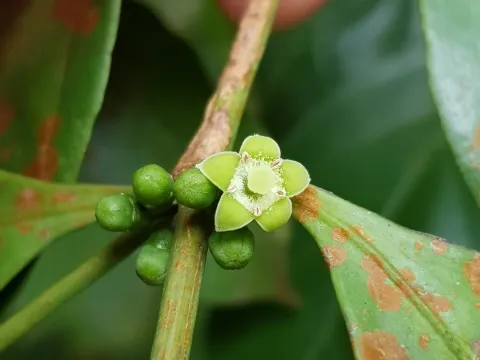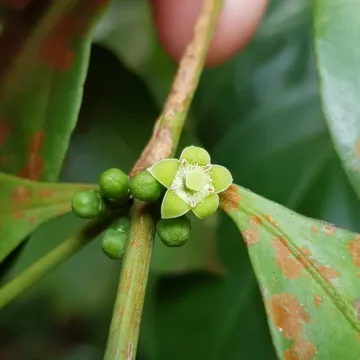
Dibridsonia conferta
Dibridsonia conferta
Description
Dibridsonia conferta is a perennial evergreen woody species belonging to the family Rubiaceae. This tropical plant is recognized for its distinctive morphological structure and is often studied within the context of botanical research focusing on the biodiversity of Asian rainforest ecosystems.
The native range of this species is located in the humid tropical regions of Southeast Asia. It typically thrives in the understory of dense forests where it is protected by the canopy. This habitat provides the constant humidity and diffused light necessary for its metabolic processes and overall growth development.
Botanically, Dibridsonia conferta is characterized by its opposite leaf arrangement and dense, clustered inflorescences, from which its specific epithet is derived. The root system is well-adapted to nutrient-rich, acidic forest soils, allowing the plant to absorb moisture efficiently even in competitive conditions.
Cultivation requires strict adherence to environmental parameters. The plant is highly sensitive to desiccation and direct solar radiation. Successful management requires a climate-controlled environment, such as a greenhouse or conservatory, where temperature and moisture levels can be regulated effectively throughout the year.
- Ideal climate: Warm and humid tropical conditions.
- Soil requirements: Acidic, well-draining, and humus-rich media.
- Watering: Consistent moisture, avoiding root zone saturation.
- Environment: Shaded or semi-shaded areas to simulate forest cover.
Regarding хозяйственное use, the species is primarily grown in botanical collections and specialized nurseries. Current research is exploring its potential for medicinal applications, as many plants within the Rubiaceae family are known to contain unique secondary metabolites, making it an interesting candidate for future pharmacological studies.
Photo gallery