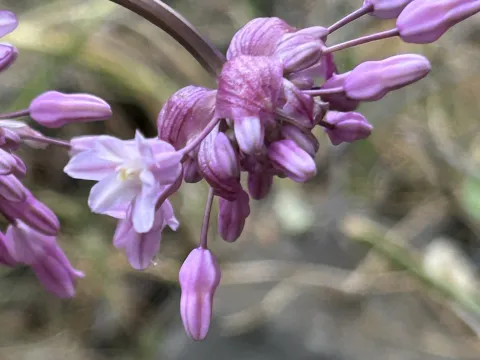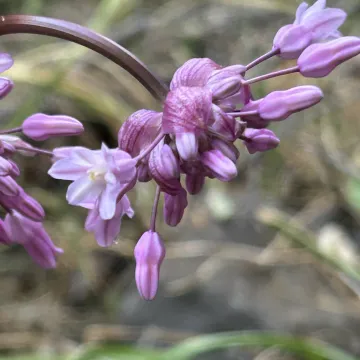
Dichelostemma venustum
Dichelostemma x venustum (Greene) Hoover
Description
Dichelostemma venustum is a unique bulbous perennial belonging to the Asparagaceae family. This hybrid plant is native to the western parts of North America, specifically California, where it thrives in Mediterranean-type climates. It is highly prized by gardeners for its distinct, tubular inflorescences that bring a wild, sophisticated look to any botanical collection.
Botanically, the plant is characterized by a corm (bulb-like structure), slender basal leaves that emerge during the cool, wet season, and a tall, sturdy flowering stem. The flowers are typically arranged in dense, umbrella-like clusters, ranging in color from deep pink to purple, which attract various pollinators throughout the flowering season.
The success of cultivating this species relies on replicating its native ecological niche. It requires well-drained, sandy or rocky soils that prevent water stagnation, which is the primary cause of bulb rot. Exposure to full sun or light shade is ideal for promoting healthy growth and vibrant flower color during the spring blooming period.
Agrotechnical practices emphasize a strict adherence to the plant's seasonal cycle. Growers must provide moisture during the growing season while ensuring the soil remains bone-dry throughout the summer months when the plant enters dormancy. In colder regions, the bulbs must be protected from frost or lifted and stored in a cool, dry environment to ensure winter survival.
- Ensure excellent drainage to prevent bulb decay.
- Planting depth should be approximately 2 to 4 inches.
- Avoid watering during the summer dormant phase.
- Apply low-nitrogen fertilizers early in the spring.
In terms of agricultural and horticultural use, Dichelostemma venustum is primarily an ornamental crop. It is widely used in rock gardens, gravel beds, and as a component of wild-flower style landscaping. Its long-lasting nature as a cut flower makes it a sought-after choice for florists who specialize in unique and sustainable floral arrangements.
Plant health management involves monitoring for fungal pathogens such as Botrytis or Fusarium, which thrive in poorly drained soils. Pests such as aphids and bulb mites can occasionally impact vigor. Implementing crop rotation in nursery settings and using sterilized planting media are recommended strategies to minimize disease pressure and ensure optimal plant health.
Photo gallery