Dichilus lebeckioides
Dichilus lebeckioides
Description
Dichilus lebeckioides is a perennial leguminous plant (family Fabaceae) primarily recognized for its role in the ecosystems of Southern Africa. While not a conventional commercial crop, it represents a significant botanical resource with potential applications in sustainable land management and livestock forage production in arid climates.
The plant originates from the dry regions of Southern Africa, where it has evolved to thrive in environments characterized by low precipitation and poor soil quality. Its natural distribution is largely concentrated in areas where typical forage crops struggle, highlighting its value as a resilient genetic resource for future agricultural adaptation.
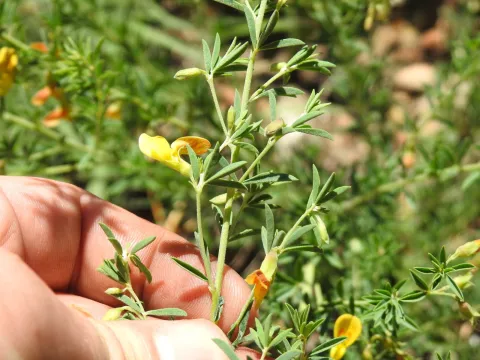
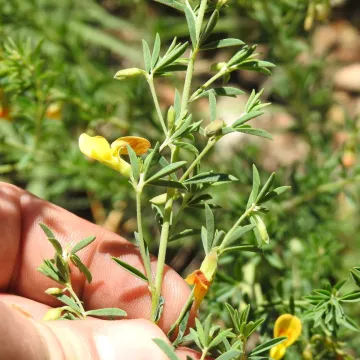
Botanically, this species is characterized by its trifoliate leaves and yellow, pea-like flowers. It develops a deep, robust root system that facilitates moisture uptake from deep subsoil layers, a critical adaptation for survival in drought-prone regions. The plant displays a compact growth habit, protecting it from excessive wind and thermal stress.
Regarding cultivation requirements, the plant prefers well-drained, sandy, or rocky soils that provide minimal resistance to root penetration. It is highly efficient in symbiotic nitrogen fixation, which contributes to soil enrichment. In terms of management, it requires minimal inputs, provided the soil drainage is sufficient to prevent root rot, which is its most common environmental threat.
- Exceptional drought resistance and resilience.
- Symbiotic nitrogen-fixing capabilities for soil health.
- Potential for use as sustainable livestock forage.
- Low input requirements for field maintenance.
The primary agricultural use of this species remains in extensive grazing systems, where it provides reliable foliage for local livestock. As interest in drought-tolerant legumes grows, Dichilus lebeckioides is increasingly studied for its role in rehabilitating degraded rangelands and supporting ecological restoration projects in semi-arid environments.
Photo gallery