Dichondra sericea
Dichondra sericea
Description
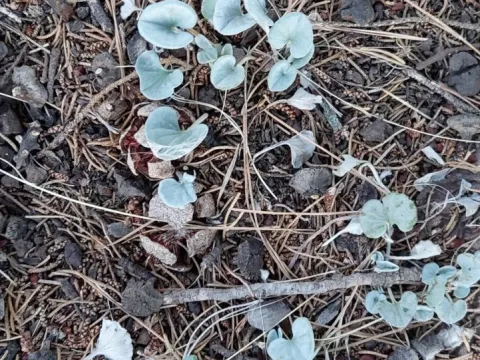
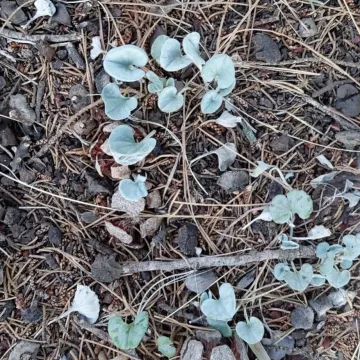
Dichondra sericea is a perennial herbaceous plant belonging to the Convolvulaceae family. It is highly valued in horticulture for its distinctive silver-grey foliage, covered in fine, silky hairs that reflect light, giving the plant a luminous appearance in garden beds or containers.
Originating from the tropical and subtropical regions of the Americas, this species thrives in warm climates. While it is naturally a perennial in its native habitat, it is frequently cultivated as an annual in cooler regions, or treated as a container plant that must be brought indoors before the first frost to survive the winter season.
Botanically, it features trailing stems that can extend over long distances, forming a dense mat or cascading effect. Its small, kidney-shaped leaves are densely pubescent, an adaptation that reduces transpiration and helps the plant tolerate exposure to intense sunlight. The plant is capable of rooting at the nodes, which facilitates its spread across the ground.
The cultivation of Dichondra sericea requires a well-draining, nutrient-rich soil and a location with full sun to partial shade. Irrigation should be consistent, allowing the soil to dry out slightly between waterings, as the plant is sensitive to root rot caused by stagnant water. Regular fertilization with a balanced, water-soluble fertilizer encourages lush foliage growth.
This crop is primarily used in landscaping for ground cover, rock gardens, and as a decorative element in hanging baskets or vertical walls. Its ability to tolerate frequent trimming makes it an excellent candidate for formal garden borders where a specific shape or size must be maintained throughout the growing season.
- Striking silver foliage with metallic sheen.
- Excellent adaptability for both containers and ground cover.
- High drought tolerance once established.
- Resilience to frequent shearing and pruning.
- Ability to root easily from stem cuttings.
Common pests include aphids and whiteflies, especially when grown in protected or overly humid conditions. Proper plant health can be maintained by ensuring good air circulation and inspecting the foliage regularly. Diseases are generally minimal, provided that the drainage requirements are strictly met to prevent fungal outbreaks in the root zone.
Photo gallery