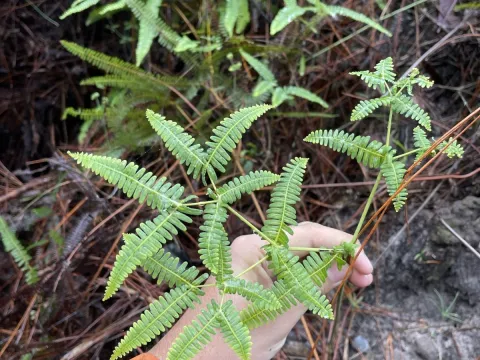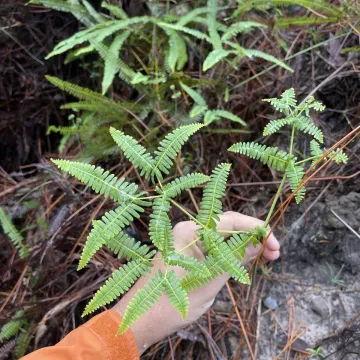
Dicranopteris flexuosa
Dicranopteris flexuosa
Description
Dicranopteris flexuosa is a notable species within the Gleicheniaceae family, characterized by its sprawling habit and dichotomously branching fronds. This fern is well-regarded for its ability to form dense, mat-like colonies, making it a significant botanical specimen in tropical and subtropical regions of the Americas.
Originating from the humid forests of the Western Hemisphere, this fern has adapted to a wide range of elevations and habitats. It is primarily found in ecosystems where precipitation is abundant and soil conditions are acidic. Its distribution covers significant portions of South and Central America, including the Caribbean islands.
Botanically, the plant is defined by its indeterminate frond growth and creeping rhizomes that allow it to colonize new ground efficiently. The fronds are typically tough and leathery, an adaptation that helps them thrive in varying light conditions. The reproductive cycle relies on spores, although vegetative propagation via rhizome division is common in natural spread.
Cultivation requires strict attention to soil chemistry and moisture levels. The plant thrives in well-draining, acidic substrates rich in organic matter. While it prefers high humidity, waterlogged soil can lead to root degradation. In a controlled environment, it is essential to manage its spread, as its aggressive growth habit can displace less vigorous species.
The agricultural and landscape uses of Dicranopteris flexuosa are diverse, ranging from erosion control on steep slopes to use in native plant restoration projects. Proper management includes monitoring for common pests such as aphids and mealybugs, as well as managing foliage health to prevent outbreaks of fungal leaf spots in stagnant air conditions.
Photo gallery