Broom Fork-moss
Dicranum scoparium
Description
Broom Fork-moss (Dicranum scoparium) is a common perennial bryophyte belonging to the family Dicranaceae. While not a traditional field crop, it serves as an essential component of forest ecosystems and is increasingly cultivated for professional landscaping, terrarium projects, and ecological restoration efforts.
The species has a broad distribution across the Northern Hemisphere, thriving in temperate and boreal forests. It is typically found growing on soil, decaying logs, and at the base of trees. Its natural range demonstrates its adaptability to various forest types, provided that moisture levels remain consistent and the substrate is sufficiently acidic.
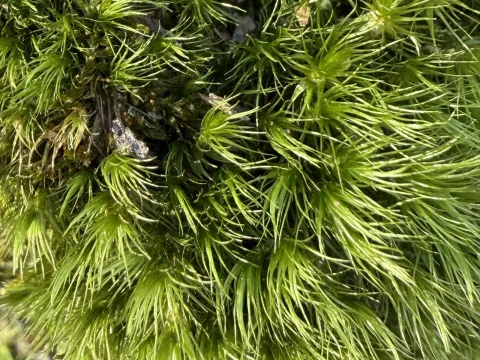
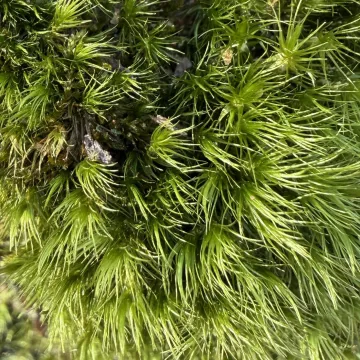
Botanically, it forms dense, tufted mats of bright yellowish-green to deep green. The stems, growing up to 10 cm in height, are densely packed with sickle-shaped, pointed leaves, creating the characteristic broom-like appearance. This physical structure allows the moss to capture and retain moisture efficiently from the atmosphere.
Cultivation requirements focus on mimicking natural woodland conditions: low light intensity, high air humidity, and an acidic substrate (pH 4.0–5.5). Unlike vascular plants, it lacks roots and absorbs nutrients and moisture directly through its leaves. Consistent irrigation with distilled or rainwater is recommended, as tap water minerals can damage the colony.
Uses include the production of stabilized moss for interior design and as a decorative ground cover in shade gardens. Regarding health, it is generally resilient to pests. However, it may suffer from fungal infections or mold if kept in environments with poor air circulation or excessive, stagnant moisture levels.
Photo gallery