Scott's Fork-moss
Dicranum scottianum
Description
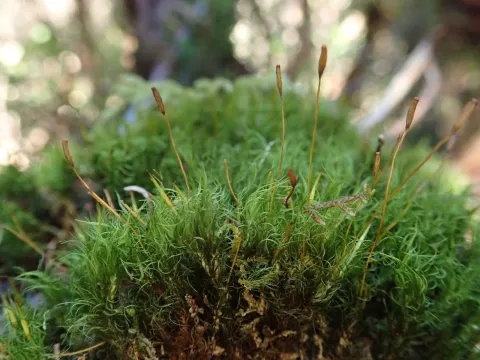
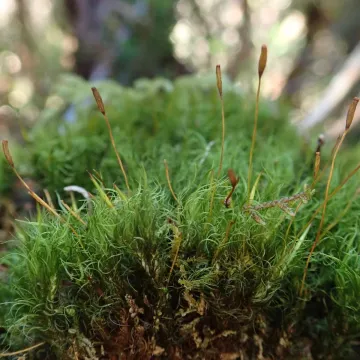
Scott's Fork-moss (Dicranum scottianum) is a perennial moss species belonging to the Dicranaceae family. While not an industrial agricultural crop, it is an essential component of forest biodiversity, contributing to moisture retention and soil surface protection within oceanic forest environments.
The native range of this species is centered in the oceanic climate zones of Western Europe. It is commonly found in countries bordering the Atlantic Ocean, such as Ireland, the United Kingdom, and Norway. It favors humid environments, typically anchoring itself on rocks, cliffs, or the bases of trees in mature woodland settings.
Botanically, this moss forms dense, compact tufts. Its leaves are distinctively curved or falcate, a feature that aids in the efficient collection of atmospheric moisture. The cellular structure of the gametophyte allows it to undergo rapid rehydration after periods of temporary drying, which is crucial for survival in its habitat.
Cultural requirements involve maintaining stable humidity levels and avoiding direct high-intensity sunlight. In forest management, the protection of this species requires careful regulation of canopy cover to prevent desiccation. It thrives on moderately acidic surfaces and relies heavily on high air humidity rather than direct root nutrient uptake.
The primary use of Dicranum scottianum lies in ecological monitoring and biodiversity conservation. By acting as a bioindicator, its presence suggests stable climatic conditions and low air pollution. Regarding diseases and pests, the plant is remarkably hardy; there are no documented agricultural pests that target this bryophyte, as it maintains its own chemical defense mechanisms.
Photo gallery