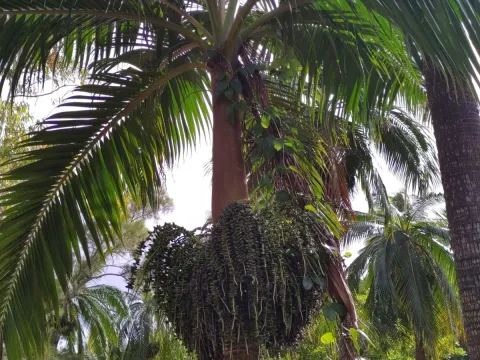

Hurricane palm
Dictyosperma album (Bory) H. Wendl. & Drude ex Scheff.
Description
The Hurricane palm (Dictyosperma album), also commonly known as the Princess palm, is a distinctive species within the Arecaceae family. It is highly regarded in horticulture for its elegant growth habit, smooth, slender trunk, and arching, feathery leaves. This palm is a member of a monotypic genus, making it a unique botanical specimen for collectors and landscapers alike.
Native to the Mascarene Islands, particularly Mauritius, this palm has adapted to humid, tropical environments. In its natural habitat, it thrives in rich forest soils with high rainfall. Globally, it has been introduced to various tropical and subtropical regions where it is used extensively as an ornamental tree in parks, botanical gardens, and residential landscapes.
Botanically, the plant is characterized by a solitary trunk that is ringed with leaf scars and is often slightly swollen at the base. The leaves are pinnate and can reach several meters in length. The name "album" refers to the whitish, waxy covering on the crownshaft and the leaf stalks, which provides a striking contrast to the deep green foliage. It is known for being moderately wind-tolerant, which contributes to its common name.
Agronomic requirements for the Hurricane palm include a well-draining, nutrient-rich soil mix. It prefers full sun to partial shade, although young palms benefit from some protection from the intense midday sun. Proper irrigation is critical; the soil should be kept consistently moist but never waterlogged. Fertilization with a specialized palm fertilizer high in micronutrients is essential for maintaining optimal leaf color and growth rate during the growing season.
Common issues include pests such as spider mites, scales, and mealybugs, which tend to infest the undersides of the leaves. Diseases like root rot are almost always the result of overwatering or inadequate soil aeration. To keep the plant healthy, growers should practice good hygiene, remove dead fronds, and ensure proper spacing between plants to facilitate airflow, which significantly reduces the risk of fungal infections.
Photo gallery