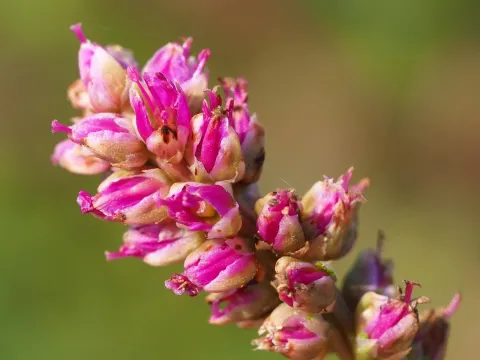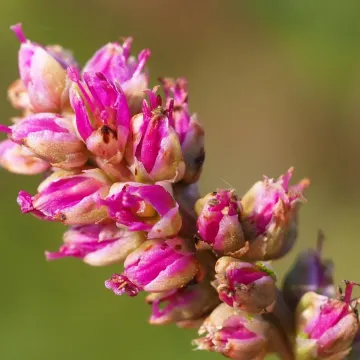
Digera muricata
Digera muricata (L.) Mart.
Description
Digera muricata is an annual herbaceous plant belonging to the Amaranthaceae family. While often categorized as a weed in modern agricultural contexts, it possesses nutritional value that makes it a significant source of fodder in tropical and subtropical regions of Asia and Africa.
The plant originates from the arid and semi-arid zones of the Old World. Its distribution range extends across the Indian subcontinent, the Middle East, and various parts of sub-Saharan Africa. Being a heat-tolerant species, it excels in environments where other crops might struggle due to high temperatures and limited precipitation.
Botanically, it is characterized by its spreading or erect stems and alternate, simple leaves. Its small, spiked flowers are distinct, and the fruit is notably muricate, featuring small tubercles or spines, which is the primary reason for its specific epithet. The root system is robust, providing the plant with the necessary resilience to extract nutrients and moisture from poor soils.
In terms of agricultural management, Digera muricata is highly adaptable. It thrives in well-drained, sandy, or loamy soils with high exposure to sunlight. While it is rarely cultivated as a primary crop, its management involves monitoring its population density to ensure it remains a beneficial forage component rather than a competitive weed that impacts yield in grain fields.
The economic value of this plant is primarily linked to livestock grazing and fodder collection. It is utilized both fresh and as dried biomass for cattle and goats. Regarding plant health, it is generally hardy, though it can be susceptible to typical Amaranthaceae pests, such as leaf-eating beetles and fungal pathogens that thrive in overly humid conditions.
- High drought tolerance.
- Valuable protein source for livestock.
- Fast growth cycle in tropical climates.
Photo gallery