Dillenia indica
Dillenia indica L.
Description
Dillenia indica, commonly known as the elephant apple, is a tropical evergreen tree belonging to the Dilleniaceae family. It is a robust plant known for its large, leathery leaves and significant, fragrant white flowers that stand out in tropical landscapes.
Originating from South and Southeast Asia, this species is native to tropical forests and riverbanks. It thrives in humid environments where the climate remains warm throughout the year. The natural distribution spans from India and the Himalayas to various Southeast Asian islands.
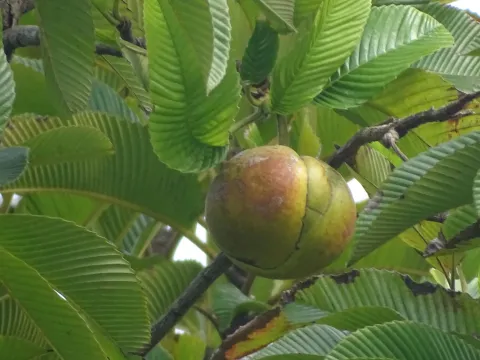
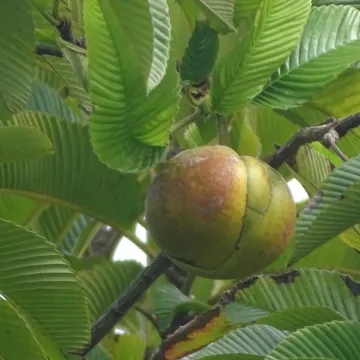
Botanically, the tree is characterized by its heavy, globose fruits covered by enlarged, fleshy sepals. These sepals form a thick, edible layer around the inner core of the fruit. The tree typically reaches a height of 10 to 15 meters and exhibits a dense, rounded canopy structure.
Cultivation requires deep, fertile, and well-draining soils rich in organic matter. The crop is highly sensitive to cold, making it unsuitable for regions with frost. Agronomic practices focus on maintaining consistent soil moisture, providing shelter from strong winds, and ensuring adequate light exposure.
The agricultural and economic utility of Dillenia indica is significant in local markets. The fruits are processed into pickles, jams, and curries due to their acidic profile. Furthermore, the wood is utilized for construction purposes, and the leaves are traditionally used for polishing metals due to their textured surface.
Common pests and diseases include various leaf-spotting fungi and sap-sucking insects that thrive in the same humid conditions as the tree. Integrated pest management strategies, focusing on canopy ventilation and the removal of infected debris, are essential for maintaining healthy plantation yields.
Photo gallery