Dillenia obovata
Dillenia obovata
Description
Dillenia obovata is a notable evergreen tree belonging to the family Dilleniaceae. This species is recognized for its structural importance in tropical ecosystems and its specific role in traditional forestry and regional agriculture within its native environment.
Originating from Southeast Asia, including countries like Thailand and Malaysia, the species is primarily found in humid tropical forests. Its natural distribution is closely linked to environments with significant annual rainfall, where the soil remains consistently moist, allowing the tree to maintain its evergreen characteristics throughout the year.
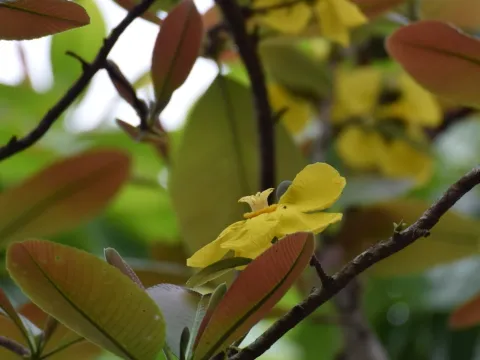
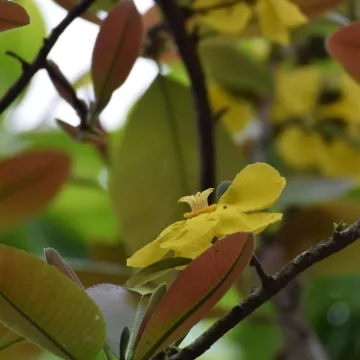
From a botanical perspective, the plant is identified by its large, leathery, obovate leaves that give the tree its scientific name. The tree grows to a substantial height and develops a dense canopy. Its flowers are typically showy with numerous stamens, which is a diagnostic feature of the Dillenia genus, followed by fleshy fruits that are well-adapted to the local environment.
Cultivation requirements for Dillenia obovata focus on stable warm temperatures and well-drained, nutrient-rich soils. The tree does not tolerate prolonged frost or extreme drought, making it suitable only for tropical or subtropical climates. Proper management involves regular monitoring of soil drainage to prevent root rot, which is the primary threat to the health of the tree in cultivation.
The economic utility of the tree is primarily centered on its high-quality timber, which is valued for its durability in local building practices. Furthermore, the fruits are sometimes utilized in local diets or traditional medicinal applications. Common pests affecting the tree include typical tropical insects and fungal pathogens that thrive in high-humidity conditions, requiring integrated pest management to maintain plantation health.
- Family: Dilleniaceae
- Plant Type: Evergreen tree
- Climate: Tropical/Humid
- Usage: Timber, local cuisine, medicine
Photo gallery