Dillwynia sieberi
Dillwynia sieberi
Description
Dillwynia sieberi is an evergreen shrub belonging to the Fabaceae family. Known for its distinct slender stems and delicate foliage, this species is a representative of the diverse Australian flora. It forms a dense, bushy structure, making it an interesting choice for those interested in xeriscaping and sustainable planting designs.
The plant originates from the southeastern regions of Australia, primarily thriving in New South Wales and Victoria. It is typically found in sclerophyll forests and heathlands, often inhabiting areas with nutrient-poor, sandy, or rocky soils. Its evolutionary development has equipped it with strong resilience to both cold snaps and seasonal heatwaves common in its native range.
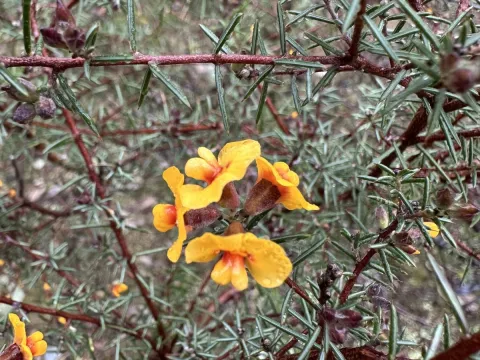
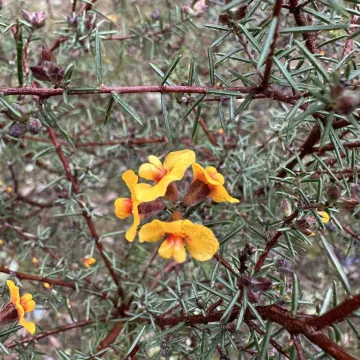
Botanically, the plant features linear, heath-like leaves that are densely arranged along the branches. During the spring season, the shrub produces an abundance of pea-shaped flowers, typically yellow or orange-yellow, which are highly attractive to local pollinators. The plant maintains its visual appeal throughout the year due to its persistent foliage.
For successful cultivation, excellent soil drainage is the most critical factor. As an Australian native, it is evolved to survive in low-phosphorus soils and can be harmed by high-concentration standard fertilizers. It requires full sunlight to partial shade and prefers locations with good air circulation to prevent moisture-related issues, which is standard for most hardy shrubs of this type.
Practical and landscape uses include:
- Ornamental use in Mediterranean and dry-climate gardens.
- Integration into rock gardens as a structural plant.
- Support for native insect populations and honey bees.
- Revegetation of degraded lands in appropriate climatic zones.
Regarding pest and disease management, the primary risks involve root rot caused by poor drainage or overwatering. Occasional infestations of scale insects or mites may occur in stressed plants. Integrated pest management, focusing on proper spacing and avoiding high-phosphorus fertilizers, is sufficient to keep the plants healthy and vigorous without relying on chemical interventions.
Photo gallery